Until recently, getting a custom part made in the United States was a nightmare: manual back-and-forth for quotes, unpredictable pricing, minimum order requirements, and lead times that could take weeks. If you were a hobbyist, startup, or engineer who just needed a few custom brackets shipped quickly, the system wasn’t built for you.
On-demand manufacturing changed that. Today, it’s a realistic option for almost anyone who wants affordable parts delivered quickly.
A garage inventor prototyping a new product? Yep. An engineer at a mid-size company who needs first articles fast without committing to a production run? Absolutely. A Fortune 500 manufacturer in need of a reliable domestic supplier with fast turnaround? That too. (Fun fact: 59% of Fortune 500 companies are SendCutSend customers.)
I work on the product and engineering side, which means I watch thousands of designs go from upload to shipped part. Here are five things to know before you order, including a few spots where you might hit roadblocks.
1. Production-Ready Design
The process is designed to be straightforward but rewards preparation. If you have a design file, great; if you don’t, template part builders and AI part builders cover many of the basics. Ambiguous geometry, broken contours, incorrect file formats, or features that can’t be physically produced are the most common reasons an order stalls before it reaches the production floor. Once you upload your file, all that’s left is to select your material and get an instant quote. Automated DFM flags issues, but it works best when you’ve thought about how the part gets made, not how it looks in CAD.
2. Set Expectations
Cost is determined by material, complexity, and quantity. Instant quoting means you can experiment with those variables in real time. You’d be surprised how affordable it can be.
Know your timeline. On-demand means fast, but other factors can extend things. Standard orders ship in 2–3 days, with expedited production available. Domestic production keeps lead times predictable and eliminates supply chain exposure associated with overseas sourcing.
Tolerances. Knowing these is essential. On-demand services hold real, repeatable tolerances, but they vary by process and manufacturer. If your part has critical features, confirm the tolerance the process can actually hold, and know if beam width and kerf compensation is on you or built into the system.
3. One Vendor, Start to Finish
Recent news has revealed the growing cost and risk of overseas manufacturing. You can expect longer lead times, shipping delays, quality control challenges, and geopolitical disruptions to supply chains, and tariffs can all add unpredictability for both cost and your timeline.
There’s another problem that many don’t consider. As if that’s not bad enough, getting a custom part the old-fashioned way can also mean working with multiple vendors: one to manufacture the part, one to cut the part, one to bend the part…you get the idea. Every handoff is a risk for something to get lost, delayed, or miscommunicated.
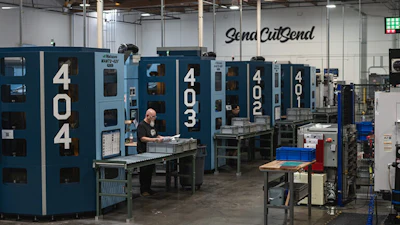
At SendCutSend, everything is made in the United States and finished before it leaves one of our warehouses. Consolidating those steps under one domestic roof means consistent quality standards, no vendor handoffs, and no global delays.
4. Build a Partnership That Lasts
Despite being an online self-serve experience, your on-demand manufacturer should be treated like a partner. Once your design is in the system, reordering is easy, and so is scaling from a prototype run to commercial volume.
At SendCutSend, we’re set up for the long game. Once your design is in the system, it’s easy to reorder or to scale up from a prototype run to commercial volume. Instead of explaining your project to a new vendor every time, you’re building continuity with a partner who already knows your team, your preferences, and your deadlines. Engineers who iterate frequently find that the time savings compound quickly.
Instant quoting and a self-serve flow mean speed and control, and the bonus of a responsive, knowledgeable customer service team (or commercial accounts team) helps fill in the gaps. Use DFM feedback, ask questions before you commit, and tell us when something doesn't come out the way you expected.
The relationship also works in reverse. We want your feedback. When something doesn’t work the way you expected, let us know! The customers who get the most out of on-demand manufacturing are the ones who treat it as a conversation, not a one-off transaction.
5. Know When On-Demand Isn’t the Right Fit
On-demand manufacturing is the right call for a wide range of projects, but it isn’t the answer for everything. If you’re still in the early concept stages and your file changes significantly every week, the better move is to finalize your design before you start ordering (or start with prototype materials like plastics or wood). Otherwise, you’re paying for parts that may not reflect where you end up. If your part needs tolerances tighter than the process can hold, or formal inspection and certification beyond standard documentation, ask up front whether that’s something the manufacturer supports. It’s always worth a conversation, and you might find out that the material or process is actually a possibility.
Also, if your project requires materials or processes outside what the platform offers, ask before you assume. SendCutSend stocks 170+ materials and handles cutting, bending, and finishing in-house. But if your project has highly specialized requirements, a quick conversation with the team will tell you right away whether we’re the right fit. A good manufacturer should be willing to tell you when you’re better off somewhere else.
The Bigger Picture
Like our CEO, Jim Belosic, said earlier this year, Reindustrializing America isn't happening in think tanks. It happens when people build real companies, buy real machines, hire real people, and ship real products. On-demand manufacturing makes that possible.
If you’ve been on the fence about trying it, the barrier to entry is lower than you think. Upload a file (or choose one of ours), get a quote, and see for yourself. America is manufacturing again, and we’re building the engine.