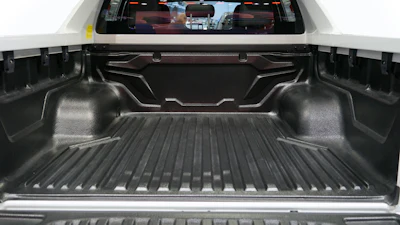
Of the 16.3 million vehicles sold in the U.S. in 2025, 3 million were pickup trucks. As this segment continues to grow in popularity among American consumers, pickups are evolving beyond their traditional role as work site vehicles. New market data points to a clear shift in how consumers use—and expect more from—the pickup box.
- According to Fortune Business Insights, American consumers spent more than $2 billion on aftermarket truck bed liners in 2025.
- When it comes to hauling goods, a 2025 Autoblog study reports that 70% of truck owners are using their trucks for paid side gigs, hauling everything from furniture to junk to yard debris.
Together, these trends make one thing clear: The pickup box has evolved from a simple cargo area into a multi-functional, high-demand space that must perform.
“What we’re seeing is a shift from a one-size-fits-all cargo box to a highly utilized, multi-purpose space that needs to perform – from work to recreation to everyday use,” CSP Chief Commercial Officer Doug Sadrack said.
A Material-Driven Opportunity for OEMs
These converging trends are prompting OEMs to rethink how pickup boxes are designed, engineered and manufactured.
Advanced composite materials offer a fundamentally different approach, enabling pickup boxes that are lighter and more durable, while allowing manufacturers to design functionality directly into the structure.
Unlike traditional materials, advanced composites enable:
- Integrated durability, eliminating the need for aftermarket bedliners, and the added cost (between $400 - $900) for consumers
- Weight reduction, supporting improved fuel efficiency and extended EV range
- Molded-in functionality, including storage features, tie-down systems and mounting points, creating a more usable, functional cargo area
- Design flexibility, allowing for optimized geometries tailored to real-world use cases, resulting in reduced manufacturing complexity for OEMs and a more innovative solution for the customer
This shift allows OEMs to move beyond incremental improvements and toward a more holistic rethinking of the pickup box as a system.
“The next competitive advantage in pickups won’t simply be bed size—it will be how effectively that space works for the customer,” Executive Director of Product Engineering Steve Harmon said. “Materials innovation is a key enabler of that transformation.”
Engineering the Future of Pickup Box Design
As a vertically integrated Tier one supplier, from material formulation and compounding through component manufacturing and finishing, CSP partners with OEMs to develop composite pickup box solutions that align with evolving customer expectations and platform requirements.
CSP offers proprietary material formulations that can:
- Reduce mass by as much as 50% over a steel box (depending on structural requirements)
- Provide UV resistance, eliminating the need for paint or additional coatings
- Resist scratching, denting and corroding
- Be molded in a single piece, reducing tooling costs and manufacturing complexity
“Designing a pickup box using composites from CSP isn’t just a material swap, it’s an opportunity to design something more durable, functional and exciting for the consumer,” Sadrack said.
With more than 30 years of experience in engineering composite pickup boxes, CSP's design and engineering teams partner closely with OEMs to solve complex challenges associated with next-generation pickup box development. By leveraging advanced composite materials, the company enables lightweighting without compromising durability, impact resistance or performance in demanding real-world conditions.