IMTS week always brings a level of excitement and anticipation.
Whether you’re excited to show off new equipment, meet prospective business partners, attend information sessions or hobnob with old industry friends, it’s definitely an event that offers something for everyone. I’d add that the one universal constant is that you’ll need a comfortable pair of shoes for the sheer square footage of this event.
As high-technology solutions continue to cement their place within manufacturing production lines and back offices, I think the goal of IMTS begins to shift. Instead of trying to convince attendees why they need to make the choice to use these solutions, exhibitors are trying to clarify why their specific technology should be your first choice.
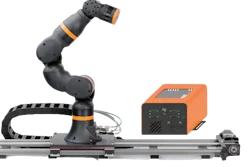
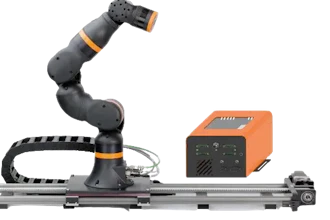
Jan Hennecke, Business Unit Manager, Robotics and Automation with igus, notes that, today, the hard part is not “whether a robot can do the job; it’s choosing the one that best fits your application.”
Hennecke elaborates that the cobot market has solved the problem of affordability which has, inadvertently, created a new challenge: selection becomes more difficult. “When half a dozen robotic arms can all handle the same pick-and-place or machine-tending job, the selection process is no longer a matter of technical capability<’ said Hennecke, “it’s a matter of which robot best fits the part, cycle time and budget across its full service life.”
I’d argue this applies to many other technologies that, in the past decade or so, have moved from emerging to fully scaled. With that has come price improvements, to be sure, but also a gradual comfortability – the applications are more wide-spread and pertain to manufacturers of all sizes, even SMBs.
The democratization of technology in manufacturing means more customers for tech vendors and more options for the end user. For IMTS exhibitors and attendees, that means these conversations can become a bit more complex – maybe even too granular for a trade show booth visit.
In response to this challenge, we’ve seen some IMTS exhibitors lead with themes of usability and problem-solving. Instead of promoting every spec known to man, these vendors are pointing to how their technologies make life easier for the user. This may feel generic but it’s honestly the top objective for industrial businesses – how technology can ease the burden of knowledge gaps, improve efficiency, reduce errors and eliminate downtime.
According to AMT – the organizers of IMTS – they expect to see solutions focused on accelerating productivity.
And it fits with the plans of the exhibitors. There was a time when the floors of this event were populated with “Wow!” type exhibits where the technology was so novel and new that it was hard to believe it was real, let alone envision how it might be incorporated into the average manufacturing plant. Now that we’ve adjusted, at least somewhat, to the “Wow!” – the conversations must shift. Vendors are aware that the technology must also solve practical challenges and attendees are coming armed with questions about when, where and how what they see on the show floor can translate into fewer late night phone calls or tough conversations about missed production targets.
According to Douglas K Woods, AMT president, the culmination of new technologies, reshoring trends and incentives for capital investment creates a lot of excitement around manufacturing, as well as many important reasons to attend IMTS this year.
“Across aerospace, defense, medical, AI infrastructure and other high-demand sectors,” said Woods, “manufacturers are looking for the technologies, partners and productivity gains that will help them compete and grow.”