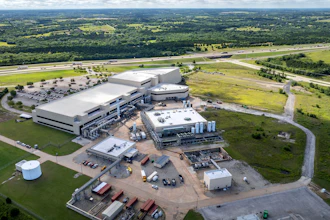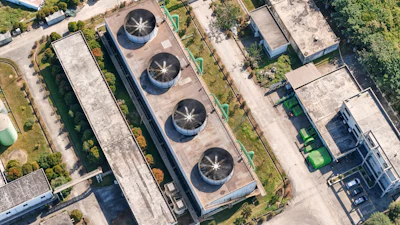
Water scarcity is becoming an operating risk for industrial facilities. While data centers have become a public and political flashpoint, the broader issue is a growing competition for limited water supplies across the industrial economy.
One of the clearest examples of the industrial water challenge recently emerged in South Texas, where Corpus Christi officials were preparing for a Level 1 Water Emergency. Restrictions would have required businesses and refineries to cut water use by 25% and could have climbed even higher. Rain delayed the emergency, but it did not remove the warning. Corpus Christi remains a refinery-heavy industrial region trying to balance residential demand, industrial growth and long-term water needs.
In response, large water users are increasingly looking for alternatives that combine water reduction, reuse and treatment strategies. Some approaches gaining adoption have been shown in field evaluations to reduce water use by more than 25% while supporting safe, reliable operation.
The Answer Has to Work Inside the System
According to Will Sarni, a water strategy expert focused on corporate water strategy, risk and resilience, the strongest water strategies connect regional supply concerns to the way companies operate day to day.
“Finding new water is important, but it’s not enough by itself,” Sarni said. “The companies that are better prepared will be the ones that quantify business value at risk in their operations and supply chains and reduce avoidable demand before restrictions force the issue.”
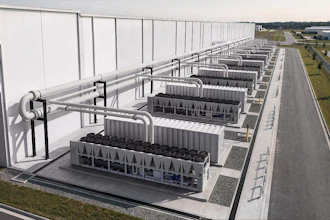
For plants with large heat-rejection loads, one of the clearest places to reduce avoidable demand is the cooling tower. The opportunity is measurable because operators can track makeup water, blowdown and changes in circulating water quality. The challenge is that each decision affects cooling performance, treatment requirements and reliability.
“Cycles of concentration is really a measure of how many times you can reuse the water before it has to be discharged,” said Steve Berens, CEO of Clear Comfort and a cross-industry water treatment expert. “Makeup water comes in, evaporation removes heat, and the dissolved minerals and other materials that do not evaporate stay behind. Blowdown is how operators keep those materials from getting too concentrated. If you can safely run at higher cycles, you reduce the amount of water that has to be blown down and replaced.”
Treatment Strategy Becomes the Lever
Higher cycles can reduce makeup water demand, but only when the system remains under control. If dissolved solids, biological activity or corrosive conditions are allowed to build, the effort to conserve water can create new reliability problems. Scale can reduce heat-transfer performance, biological growth can increase maintenance and health-risk concerns, and corrosion can damage equipment.
That is why treatment strategy is becoming central to the water-reduction conversation. Industrial facilities are not only looking for ways to use less water. They are looking for ways to use less water without making cooling systems more fragile.
Advanced Oxidation Process, or AOP, is one alternative treatment approach being used in cooling tower applications to help control biological growth, reduce biofilm and support cleaner circulating water with less reliance on conventional chemical programs. In one federal field evaluation of AOP cooling tower treatment, the system reduced makeup water use by more than 26%, increased average cycles of concentration to more than nine and significantly reduced maintenance hours. The goal is to keep water useful longer without making the cooling system harder to operate.
 Clear Comfort
Reduce First, Then Reuse
The same logic applies to reclaimed or reused water. Reuse can reduce demand on potable supplies, but it is not automatically simple. Water reused from another process may carry higher organic load, biological activity, dissolved solids or treatment residuals, especially if the cooling system was originally operated around a more predictable makeup water source.
Berens said the first step is not always to build a more complex reuse system. It is often to reduce how much water the facility needs.
“If you want to reclaim water, the first thing to do is use less of it,” Berens said. “The second is to make sure the water you are trying to reclaim has a better matrix. Do not put as many chemicals into it. Make it easier to reuse rather than focusing only on taking everything back out.”
That point is becoming more important as facilities evaluate reuse. Reclaimed water can be part of the answer, but it still has to be managed inside real operating systems. If water conservation depends only on accepting more difficult water, facilities may trade one problem for another.
A more practical sequence is to measure where water is going, reduce avoidable blowdown, improve cycles where the system can safely support it and limit the chemistry that makes water harder to reuse or discharge.
New supply can strengthen long-term resilience, but it does not eliminate the need for facilities to manage the water they already control.
For industrial operations, waiting for water restrictions can leave few options when shortages hit. Reducing unnecessary water use, expanding reuse where practical and improving cooling efficiency can help facilities prepare for tighter supplies without compromising performance.
Greg Rankin is a Houston-based freelance writer who covers industrial water use, cooling systems, and the technologies shaping more efficient operations.