JPMorganChase recently announced the Security and Resiliency Initiative, a $1.5 trillion, 10-year plan to facilitate, finance and invest in industries critical to national economic security and resiliency. As part of this new initiative, JPMorganChase will make direct equity and venture capital investments of up to $10 billion to help select companies enhance their growth, spur innovation and accelerate strategic manufacturing.
The firm’s effort comes at a time when the U.S. is looking to modernize infrastructure, fortify supply chains and implement policies that promote growth. JPMorganChase will focus on the following four key areas, supporting companies across all sizes and development stages by offering advice, providing financing and, in some cases, investing capital:
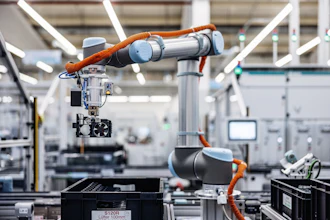
- Supply Chain and Advanced Manufacturing, including critical minerals, pharmaceutical precursors and robotics.
- Defense and Aerospace, including defense technology, autonomous systems, drones, next-gen connectivity and secure communications.
- Energy Independence and Resilience, including battery storage, grid resilience and distributed energy.
- Frontier and Strategic Technologies, including AI, cybersecurity and quantum computing.
More specifically, the firm has currently divided these four key areas into 27 sub-areas, ranging from shipbuilding and nuclear energy to nanomaterials and critical defense components.
The initiative will also include special, thematic research on private companies and supply chain management issues related to rare earths, AI and cybersecurity.
A number of key stakeholders recently weighed in on the initiative.
John Watters, CEO and Managing Partner at iCOUNTER
"I agree with JPMC’s plan to dive into investments in these categories. It appears that we’re at an age of reformatting global alliances through the lens of key interdependencies to make sure that can sustain our economy and aren’t enslaved to a competitive trading block.
"The U.S. is in the process of forming it’s trading block and is playing catch up, from my perspective, to counter China’s longstanding initiatives in this area. Look no further than the Belt and Road initiative – that’s a declaration of 100-year alliances – something that most countries can’t even contemplate."
Mr. Piyush Pandey, CEO at Pathlock
"Organizations are now better educated on the risks that exist within their application landscape, affecting transactions and data, and are taking action to secure those applications for both security and compliance purposes. Based on today’s economic climate, organizations are certainly being more thoughtful about their investments.
"We see a priority being placed on solutions that have a clear path to ROI within months, rather than years. Helping customers quantify risk in actual dollars, and the ability to help them put cash back on their books, eases any macro-economic concerns.
"Moving forward, organizations need to not make investments with the goal of achieving complete Zero Trust or Zero Risk, as this is both impractical and impossible. Instead, optimizing for better security should be the mission guiding you towards the right investment decisions."
Dr. Margaret Cunningham, Director of Security & AI Strategy at Darktrace
"Data security is foundational to building safe and trustworthy AI systems. It’s encouraging to see resources, such as the NSA and CISA’s recent AI data security guidance, helping organizations better understand the risks around AI data sourcing and offering concrete best practices for securing that data.
"A growing challenge is the difficulty in differentiating between human- and AI-generated data. As AI systems become more prevalent and sophisticated, organizations must develop stronger mechanisms for validating data provenance to avoid reinforcing bias, misinformation, or model drift.
"That said, implementing these practices at scale can be costly and resource-intensive — and without stronger incentives or accountability, some organizations may be hesitant to make the necessary investments. As the industry matures, it will be important to align incentives and expectations to ensure responsible practices are not just recommended but realistically adopted.
Ms. Kris Bondi, CEO and Co-Founder of Mimoto:
"Without continued investment and focus on mathematics and computer science, there is a point in time when there aren’t the needed number of people with advanced skills to make AI advancements at the same speed.
"What is most important now is to move fast on implementing the appropriate AI-enabled cybersecurity technology. It must be designed to recognize and adapt to what AI-created threats look like or could look like. The biggest threat to cybersecurity is not moving fast enough to deploy solutions that can catch and respond to threats in real-time."