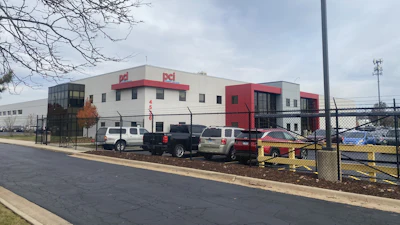
On a recent Saturday morning in Rockford, two manufacturing leaders sat down for breakfast. No agenda. No slide deck. Just coffee, eggs and a candid conversation about the pressures of growth, the realities of leadership and what it takes to sustain excellence in a highly regulated industry.
For Mike Rodriguez, executive director of operations at PCI Pharma Services, those breakfasts with Dean Harms, regional manager at Illinois Manufacturing Excellence Center (IMEC), reflect something deeper than a vendor relationship. They represent a long-term partnership rooted in shared experience and reinforced by the strength of an entire team.
“Our role isn’t to replace what companies already do well,” Harms said. “It’s to fill gaps and help them move faster and more confidently toward their goals.”
“He’s a true partner,” Rodriguez said. “Dean understands manufacturing. He listens first and when I ask for help, he either has the right expertise or knows exactly where to find it.”
That last point matters. While Harms may serve as the primary point of contact, Rodriguez is quick to acknowledge that the value of IMEC extends beyond one individual.
“Dean brings the IMEC bench with him,” Rodriguez said. “If we need operational excellence support, leadership development, maintenance expertise or digital strategy, there’s depth behind him. It’s never just one person.”
That partnership has become increasingly important as PCI continues to scale.
“PCI is a large organization, but they don’t have endless resources at the site level,” Harms said. “That’s where our broader team can add value. They’re growing and with that growth comes the need for consistency, leadership development and operational discipline across multiple facilities.”
From Ice Cream to Global Pharma
PCI’s roots in Rockford stretch back more than half a century. The company began in 1969 as Anderson Packaging, founded by local entrepreneur John Anderson. The origin story, now part of local manufacturing lore, involves an ice cream customer, a unique packaging request and a quote intentionally priced high to discourage the work. The customer accepted anyway and a business model built on packaging customization and problem-solving was born.
By the time Rodriguez joined the company in 1995, the organization had evolved far beyond its early days. It was packaging consumer products and building relationships with major brands, laying the operational foundation for something more complex.
The turning point came around 2000 when PCI landed a high-stakes pharmaceutical project with one of the largest pharmaceutical companies in the world. The packaging work required extraordinary precision, process control and regulatory discipline.
“That really put us on the map,” Rodriguez said. “When pharma companies saw that we were trusted by a major company in the industry, it changed the conversation.”
Designing Quality Into the Process
As pharmaceutical manufacturing accelerated in the early 2000s, PCI distinguished itself by designing quality directly into its operations. The Rockford team became an early adopter of advanced vision systems capable of verifying tablet color, size and code accuracy in real time.
“In pharma, mix-ups are unacceptable,” Rodriguez explained. “Quality isn’t a department. It’s the process.”
That mindset helped PCI grow steadily, even through economic cycles that challenged other sectors. During the 2007–2008 recession, pharmaceutical demand remained relatively stable. And when the COVID-19 pandemic disrupted global supply chains, PCI’s internal machine shops and automation capabilities allowed it to respond faster than competitors facing year-long equipment lead times.
The Rockford site played a critical role in helping essential therapies reach patients during a global crisis.
Rockford As a Strategic Advantage
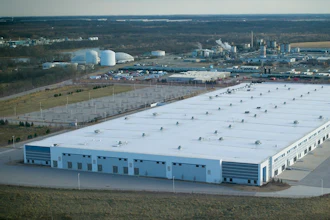
Today, PCI operates 12 plants in the Rockford region, employing about 3,000 people locally. Globally, its private equity parent company has expanded to the United Kingdom and Ireland, with corporate offices in Philadelphia. Yet Rockford remains central to its pharmaceutical packaging operations.
The region offers a skilled manufacturing workforce, proximity to major Midwestern markets and a logistics network anchored by one of the fastest-growing cargo airports in the country.
“Rockford has supported our ability to be agile in ways other locations can’t,” Rodriguez said. “This community understands manufacturing.”
For PCI, that understanding translates into speed, reliability and a workforce accustomed to complex, regulated production environments.
IMEC As Strategic Connector and Capability Provider
As PCI entered a new phase of rapid growth, Rodriguez faced a familiar challenge: how to scale leadership capability and operational consistency across multiple facilities while maintaining compliance standards.
He reached out to IMEC.
What began with Lean and Six Sigma Green Belt training expanded into supervisor, mid-level manager and line-leader development programs tailored to contract manufacturing, where speed and compliance must coexist.
“What stood out was sustainability,” Rodriguez said. “IMEC doesn’t just train people and leave. They help us build systems that last.”
Beyond leadership development, IMEC’s team has supported PCI in maintenance evaluations, cold-chain validation, Excel training, modernization strategy and digital integration planning.
“They’re not consultants who’ve never been on a shop floor,” Rodriguez said. “These are people who’ve lived it. And when Dean walks in, he’s backed by specialists who understand our world.”
That hands-on approach became especially evident during a series of Kaizen events at PCI, where IMEC worked alongside cross-functional teams to streamline workflows and eliminate inefficiencies in highly regulated packaging environments.
“We’re not coming in with a theoretical model,” Harms said. “Kaizen at PCI meant standing on the floor with their teams, mapping processes in real time and identifying what actually slows them down. In a regulated environment, you can’t just move fast; you have to move right.”
The events focused on reducing changeover time, improving line readiness and reinforcing standard work across shifts. According to Harms, the real impact was how the teams began to sustain continuous improvement on their own.
“What we saw was engagement at every level,” he said. “When operators and supervisors start owning the improvements, that’s when Kaizen sticks. That’s when it becomes part of the culture rather than a one-time event.”
Preparing for What's Next
As PCI looks ahead, modernization is less about isolated technology upgrades and more about integration.
“Modernization today is really about data,” Harms said. “It’s about how systems talk to each other and how leaders use that information to make real-time decisions.”
Rodriguez credits IMEC’s team-based approach with helping bridge generations of knowledge while preparing for automation and AI-driven systems.
“Dean’s always learning,” Rodriguez said. “And through IMEC, we’re exposed to broader expertise that helps us think ahead.”
For IMEC, PCI exemplifies what manufacturing strength looks like when institutional depth supports individual leadership.
For Rodriguez, it still comes back to relationships.
“We’ll always call IMEC first,” he said. “Not because of one person, but because of the trust and capability behind the organization. That kind of partnership is rare.”
IMEC is a team of improvement specialists and technicians that works closely with its clients to plan critical business improvements in the areas of leadership, strategy, growth, operations and workforce.