In Donaldsonville, generations of industrial expertise are being carried into Louisiana’s next generation of industry.
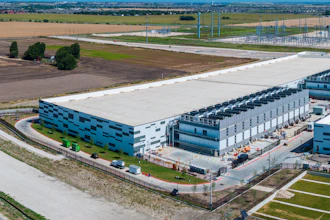
Hyundai Steel is developing its first North American manufacturing facility. The $5.8 billion investment is expected to create 1,300 direct new jobs when commercial production begins in 2029.
At Donaldsonville High School, Patrick Lawless is passing on skills he spent more than 40 years building in the welding industry. For someone starting from scratch, he said structural welding certification can take as little as 14 to 16 weeks, with more specialized training available from there.
As industrial demand grows around him, so does demand for that training.
Lawless teaches through River Parishes Community College (RPCC), and his lab has 10 welding booths. Classes fill as soon as registration opens, leaving many prospective students waiting for the next semester.
“I have to turn people down, and that hurts,” Lawless said. “Everybody that wants it, I want them to have the opportunity to learn, go in the field and be successful.”
Soon, he will have room for more.
Designed for the Work Ahead
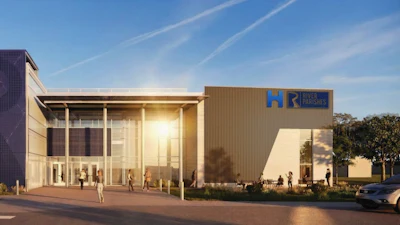
Construction is underway on the $30 million RPCC Hyundai Steel Training Center in Donaldsonville, a roughly 50,000-square-foot facility expected to double the number of welding booths and expand the college’s industrial training capacity. The center is targeted to open by the end of 2027.
RPCC and Hyundai have spent more than a year working together on the skills students will need for steelmaking careers.
That work has grown into a two-year program. Students complete the first year at RPCC or one of five partner community and technical colleges across the state, then move into steel-industry-specific training at the new Donaldsonville center. The program leads to a technical diploma in electrical maintenance, mechanical maintenance or advanced manufacturing.
What Chancellor Quintin Taylor dubs RPCC’s “Fab Five” — process technology, instrumentation, electrical, millwright or industrial maintenance and welding — have prepared people for careers across Louisiana industry for years.
The new steelmaking curriculum builds on that foundation without limiting where those skills can lead.
“We didn’t want to pigeonhole students into one specific industry,” Taylor said.
Earlier this year, an RPCC team traveled to South Korea to see Hyundai’s training model firsthand. Back in Louisiana, the company worked with the college, architects and designers on the new facility, helping shape individual labs around the equipment, technology and power requirements of steelmaking.
An electric arc furnace, for example, is far too large and complex to replicate for training. Instead, RPCC plans to use augmented and virtual reality and other simulation tools to bring parts of the plant environment into the classroom.
Hyundai engineers are also expected to participate in instruction, giving students another connection to the technology and processes they are learning.
“It allows students to interact with Hyundai, up close and personal,” Taylor said.
Some students will arrive at that training before they have even finished high school.
Direct Paths to Opportunity
Parker Collins is one of them.
The Plaquemine High School senior is already learning to weld through Jump Start and dual enrollment, taking high school classes during the day and training through RPCC in the evening.
Welding was not always the plan. Collins was exploring his options when his guidance counselor suggested it. His father had welded on a farm, so he decided to give the trade a try.
Now, before even graduating high school, Collins is beginning to see how many directions welding could take him.
“I feel like I can hit the moon because of the instruction here,” Collins said.
Taylor wants students making those connections earlier.
RPCC’s approach stretches from elementary school, where its E3 Academy — Engage, Expose and Employ — introduces students to local industries and career opportunities, through high school programs that can lead to college credit and industry credentials.
By evening, Lawless’ welding lab fills with adults arriving at different points in their careers.
Sinee Solite had already earned a degree and built a career in marketing when she arrived in Lawless’ class.
She had wanted to learn a trade for years. With more industrial investment coming into the region, she decided the time was right.
When Solite registered, she remembered roughly 50 people trying to get into Lawless’ class.
“With so much industry coming to the area, in this little area, it’s kind of just what’s hot right now,” Solite said. “It’s going to bring a lot of jobs.”
Fred Villavaso started welding in high school and continued training with Lawless, moving from structural welding into pipe and combination welding.
The morning after his interview, he was scheduled to start a new combination welding job with Turner Industries.
For Villavaso, Hyundai is joining an industrial landscape already filled with places to put those skills to work.
“You’ve got CF Industries, you’ve got Shintech, all on LA 1. You got Dow Chemical, you got a lot of plants on this side of the water,” Villavaso said. “And coming in with the Hyundai steel mill, it’ll be a lot more opportunities for craft hands.”
Building for the Long Term
The opportunities taking shape around Hyundai span the skills, technology and expertise needed to build, operate and advance a new steelmaking industry in Louisiana.
In June, LSU and Hyundai Steel signed a Master Research Agreement that links the company’s global manufacturing expertise with LSU’s research enterprise and statewide talent pipeline.
The agreement creates a long-term framework for collaboration across metallurgy, materials science, energy, robotics and automation and environmental engineering. With the core research terms established upfront, individual projects can move forward as specific research needs emerge.
For LSU students and researchers, the collaboration can encompass work alongside industry on challenges ranging from developing new performance materials and improving manufacturing processes to smart factory technology, robotics and energy use.
“Transformational investments like Hyundai Steel show why labor and capital have to move together,” LSU President Wade Rousse said. “LSU has a responsibility to make sure our students, researchers and statewide expertise are part of that progress. Industry partnerships connect our talent and research directly to real-world challenges, creating new pathways for students while helping companies solve the challenges that come with the next generation of industry. Over time, that work builds more than a workforce for one project. It expands opportunities for our students and graduates while advancing the research, technology and expertise Louisiana will rely on for decades.”
Those pathways are beginning to lead directly to Hyundai. In October, Hyundai-POSCO Louisiana Steel announced nearly 40 positions across engineering, construction, infrastructure, materials management, safety, technology, finance and other functions. The company expects to have 230 to 300 employees by the end of 2027, with its largest wave of production hiring planned for 2028.
Taylor said the new center will initially focus on preparing Hyundai’s workforce. Once the company has built out its permanent workforce, the facility will transition into a traditional community college campus while continuing to support Hyundai with new-hire and incumbent-worker training.
For Lawless, that future starts with the students already coming through his classroom.
“I want to see young students be successful in a trade that I was successful in,” Lawless said. “The biggest way I can give back is by teaching them what I know.”