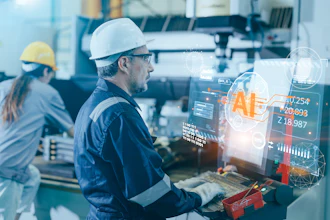
According to Deloitte, 93 percent of manufacturers say AI will be a pivotal technology for growth in the coming years. This growing significance offers huge potential, but also raises numerous questions about integration, costs and impacts on the workforce.
We recently sat down with Future Tech’s Chief Technology & Innovation Officer, Matt Scavetta, to discuss the opportunities and challenges being generated by artificial intelligence.
Jeff Reinke, Editorial Director: The momentum behind AI implementation in manufacturing has not slowed. What do you feel are some of the biggest missteps that companies are taking in their eagerness to put AI to work, and how are these actions impacting workers?
Matt Scavetta, CTIO, Future Tech: One of the biggest missteps I see is companies rushing into AI projects without addressing data quality. Many leaders expect AI to perform well even when the underlying data is inaccurate, which is often the result of poor processes or insufficient training.
Far too often, sole responsibility is being placed on technical teams when data is a direct reflection of process. Successful AI projects have shared accountability between IT teams and business leaders who own the upstream processes where data is generated.
Another major gap is related to change management. Understanding that there is almost always a productivity dip when implementing technology as employees need time to adjust to the change and work through how they think about problems.
Any technology rollout comes with issues and AI is no different. Implementing and using AI requires both new skills and a shift in mindset. As such, leaders need to be prepared for things going wrong and resist the instinct to distrust the new system immediately.
There’s also a darker side: AI can be overly confident in its outputs, even when it’s wrong, leading to false positives that people accept too quickly. That creates risks, especially in areas like legal reviews or contract terms. If employees treat AI like an intern whose work never needs checking, organizations can end up in unfavorable positions.
JR: A common perception is that AI replaces people, and therefore jobs. How would you recommend introducing new AI initiatives to the workforce while quelling concerns over being replaced?
MS: The conversation about AI and jobs is too focused on cost reduction. Companies should highlight the other value levers that AI brings, such as scalability, quality control, customer stickiness and improved services. While these benefits are harder to quantify than cutting headcount, they matter just as much and need to be discussed more.
It is important to recognize that many roles will evolve and others may shift toward more advanced work and there will be new roles created that didn’t exist before as new skill sets become necessary. For example, with the changes and advancements in AI we’re going to need more electrical engineers, mechanical engineers, tradesmen, and data scientists.
If a company is introducing AI into an area where jobs may be displaced, the best approach is transparency and support. Ideally, employees get the chance to be upskilled or trained into new roles. If a position is truly going away, there’s no perfect way to deliver that message, but the company should offer resources and a path to move into other roles whenever possible.
Ultimately, successful AI adoption depends on training. Giving people AI tools without the right training is like giving someone the keys to a Ferrari without a license.
JR: What types of skills do you see the current manufacturing workforce lacking when it comes to utilizing AI?
MS: Data literacy is a major gap. Employees need to understand the different types of data such as sensor data and ERP data and how each different data source feeds into the outputs AI produces. Employees should be able to interpret recommendations, ask why, validate results, escalate issues, and then execute.
This goes back to the idea that AI works a bit like an intern: you can’t just accept what it gives you without proper oversight and analysis.
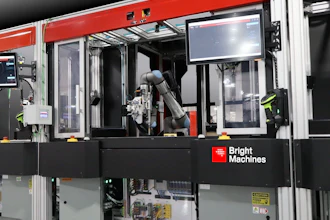
Another emerging area is human-machine interaction. As robotics become more prevalent in manufacturing, fluency in how humans and machines hand off tasks to one another will be important.
Finally, an agile mindset is key. AI models and tools are evolving constantly, and the people working with them every day need to embrace ongoing change. Those who resist that dynamic will struggle to succeed.
JR: In what areas or employee roles do you feel AI can have the most impact?
MS: Maintenance is one of the biggest areas where AI can make an impact, especially through sensor data that predicts unplanned downtime. Quality assurance is another area where AI shines, using computer vision to detect issues along assembly lines. Supply chain use cases are already seeing huge gains, particularly in demand forecasting, demand planning, and supplier risk scoring and analytics is also a meaningful area, assuming the underlying data architecture is sound.
Finally, process optimization will offer the greatest long-term opportunity. Digital twins allow companies to simulate manufacturing lines or warehouse layouts, test improvements, and make more confident investment decisions.
JR: There’s an abundance of AI tools and providers in the marketplace. What selection advice would you offer in sorting through all these options?
MS: Start by anchoring any AI investment to a business outcome or an OKR. If you begin with a narrow day-to-day problem, you’re unlikely to get the return you expect. Any AI purchase should be a top-down approach tied to measurable outcomes.
Next, ensure the tools integrate well with your existing ecosystem, especially your core systems, such as your ERP. If a solution can’t connect cleanly, you’ll end up with custom work, delays, and ultimately failure.
Vendor maturity also matters. These companies become partners, not just tools. For mission-critical needs, you don’t want to rely on a provider that’s too early-stage. Maturity is often reflected in an organization's cybersecurity posture as well. This is important because whatever industry you operate in, your vendor must meet the relevant security and regulatory standards.
However, there’s also a time and place to pilot technology. Organizations need the ability to move fast, test, and learn along the way. Some companies even form innovation teams to experiment in a secure, contained environment and uncover new opportunities.
JR: There’s been a lot of talk lately about the AI bubble popping. What is your take?
MS: I don’t believe we’re heading toward a bubble. I think this is very similar to the cloud era: some players will shake out, but strong architectures and products will continue to thrive.
There are two government-driven forces that will make a bubble unlikely. One is the NSM-10 mandate around preparing for post-quantum cryptography by 2030. Quantum computing relies heavily on AI for error correction, which means companies will need to keep investing in AI architectures, software, and resources as mandated by the government.
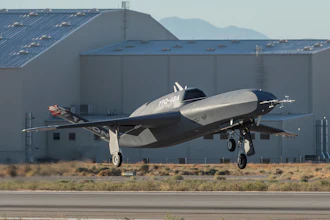
The other government driven initiative is Mission Genesis, which is about the U.S. government having a concentrated effort into advancing AI capabilities and innovation to prepare for the next frontier of warfare. Modern warfare relies heavily on drones powered by edge AI, and as these systems evolve, they require ongoing investment in robotics, processors, architectures, and edge computing. With mandates like these, investment will continue, not pop.
JR: Outside of AI, what do you see as some of the biggest trends impacting manufacturing?
MS: One of the biggest trends impacting manufacturing is recognizing the major impact that edge computing will have. As processors improve, robotics systems will be able to handle more advanced tasks on the factory floor. Digital twins are another major trend. Even without the predictive AI element, digital twins allow companies to simulate physical environments and rethink assembly lines from the ground up.
In addition, wearables and augmented reality are gaining traction as well. Heads-up displays can support workers during assembly by giving them relevant information in real time.
Finally, cyber resilience and data governance are becoming critical. As the number of technologies increases, so does the threat surface. Companies have to embed security into every part of their architecture, from physical equipment to the software that runs it.