Few industries test workers' resilience like the cold chain. From subzero freezers to warehouses that rarely reach above 38°F, the work is physically demanding and mentally draining. Forklift windchill, condensation on concrete floors, and dim lighting all compound the difficulties. For new hires, the shock of these conditions often proves too much. As one long-time supervisor put it, "They take off their coats at lunchtime, and poof — they're gone."
The Retention Challenge in Cold Storage
Employee turnover is costly. Replacing a single warehouse worker can run thousands in recruiting, onboarding, and lost productivity. Add injuries, and the financial burden grows. The National Safety Council pegs the average cost of a workplace injury at more than $40,000, with the total economic impact exceeding $160 billion annually. Cold storage environments, where cold stress slows reflexes and raises accident risk, carry a disproportionate share of those costs.
The question for employers is clear: How can these jobs become not only safer, but more sustainable—the kind of work people want to keep doing?
Comfort as a Retention Lever: Gear That Makes the Difference
The answer starts with comfort. Workers who can keep their hands warm, their feet steady, and their bodies protected from cold stress are more focused, productive, and likely to stay.
Properly fitted and temperature-rated workwear reduces fatigue and accidents and helps employees finish shifts without feeling defeated by the cold. Moisture-wicking base layers, insulated jackets that don't restrict movement, and boots designed for frozen concrete floors can transform what might otherwise be an unbearable shift into one that feels manageable.
Employees recognize the difference. Case studies across the cold chain show that companies investing in insulated PPE and footwear report fewer injuries and lower turnover. When discomfort is no longer driving workers out the door, employees are willing to stick with demanding jobs and, over time, become skilled, reliable contributors.
The products that matter most are those addressing everyday discomfort, turning "death by a thousand cuts" into "long-term employment":
- Footwear: Slip-resistant, insulated boots with composite toes, instead of cold-conducting steel toes, reduce falls on frozen concrete and reduce foot fatigue.
- Outerwear: Freezer jackets, bib overalls, and coveralls with stretch panels at the knees, elbows, and waist protect against subzero temperatures without restricting movement.
- Gloves: Insulated, cut-resistant gloves keep hands warm without sacrificing dexterity, vital where grip and precision matter.
- Thermal Layers: Moisture-wicking base layers, thermal mid-layers, and insulated shells help workers regulate body temperature across temperature-controlled loading docks and deep freezers.
These aren't just creature comforts—they're retention tools. One company cut high turnover among new hires simply by introducing insulated footwear. Another reduced cold stress complaints and lack of attendance with proper layering. The lesson here is clear: when employees feel protected, they stay.
 Four employees outfitted with mix-and-match PPE present a united front while staying warm and productive across a range of temperatures in a protein processing and storage facility.RefrigiWear
Building a Culture of Care and Safety
Gear is the foundation, but retention grows fastest when comfort is reinforced by culture. Employees notice when their employers go beyond simply handing out PPE and start investing in their daily well-being.
Simple practices like rotating shifts to limit cold exposure, scheduling warming breaks, or holding short safety huddles prove that safety is more than a compliance exercise. Even small steps, like buddy systems to spot early signs of cold stress, signal that management values its people just as much as productivity.
Some employers go further with wellness initiatives or on-site health resources. These programs build trust, showing employees that the company's commitment to safety isn't just about avoiding reportable incidents, but about making the job sustainable. That trust translates into stronger morale, higher satisfaction, and a workforce that's more likely to stick around for the long haul.
The Loyalty Loop
Retention in the cold chain is ultimately about people, not just programs. Workers who believe their employer values them as individuals and not just as labor approach the job differently. Instead of bracing themselves to endure another shift, they show up with a sense of confidence and commitment. That shift in mindset is what transforms cold storage jobs from temporary stints into long-term careers.
Once safety and comfort are prioritized, a self-reinforcing cycle begins:
- Protected employees are healthier and more comfortable: Warm hands, steady footing, and less fatigue reduce the daily grind that wears people down.
- Healthier employees stay longer: With each additional month on the job, workers adapt better to the environment and feel less like outsiders.
- Experienced employees work more safely and productively: With time, they master equipment, workflows, and pacing, making fewer mistakes and delivering more consistent results.
- Safer, more productive teams strengthen company culture: Confidence replaces hesitation, collaboration increases, and morale improves across the facility.
- Strong culture and stability reduce turnover costs and deliver measurable ROI: Every injury avoided and every employee retained past the critical first 90 days adds financial resilience to the operation.
The real power of this loop is that it doesn't rely on abstract metrics or one-off incentives. It grows out of everyday signals of care: a jacket that beats the chill, a policy that encourages warming breaks, or a supervisor who checks in during a shift. These gestures accumulate into trust, which is the foundation of loyalty.
Why Retention Matters
The financial benefits are real. Lower injury rates translate into reduced healthcare costs and higher productivity. Lower churn decreases recruiting and onboarding expenses while stabilizing operations by minimizing vacancies. More experienced teams make fewer errors, keep product moving safely, and help new hires adapt more quickly. Stability builds momentum.
The human benefits are equally powerful. Employees who feel seen and supported are more engaged, more loyal, and more willing to commit their future to the job. That commitment translates into fewer accidents, stronger teamwork, and a culture where safety and performance reinforce one another.
Put together, the ROI is undeniable: healthier employees, steadier operations, happier teams, and stronger financial results. Working in cold storage may never be easy, but with the right gear, systems, and mindset, it becomes work worth keeping and careers worth building. Retention is not just a metric in an industry that depends on resilience; it is the key to long-term success.
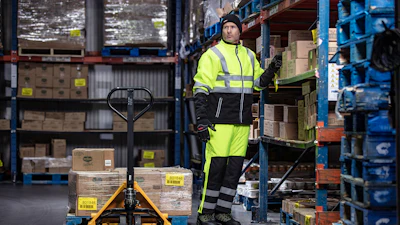
 An order selector stays warmer and works more productively in the freezer with high-visibility freezer bibs, freezer jacket, thermal base layers, freezer gloves and safety toe freezer boots.RefrigiWear
 Leigh StadelmeierRefrigiWear
Having experienced a traumatic fall while serving in the Army, Stadelmeier devotes his career to sharing safety gear and training to prevent accidents on the job.