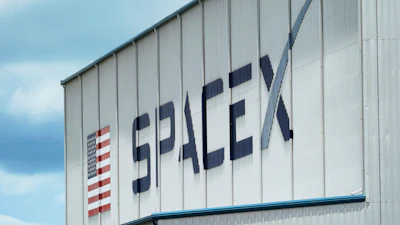
HANOI, Vietnam (AP) — Vietnamese aerospace company VinSpace said Tuesday it has signed a contract with SpaceX to send its first satellites into orbit aboard a SpaceX rideshare mission in 2027, as the Southeast Asian nation moves to develop its nascent space industry.
VinSpace will launch its satellites on a SpaceX Transporter rideshare mission run by Elon Musk's company, which carries satellites from multiple customers on a single rocket to share launch costs, it said in a statement.
The satellites, which VinSpace said it will develop and operate, will test the company's technology in orbit and support future commercial applications.
VinSpace is part of Vietnam's Vingroup conglomerate and was established in November 2025. The company said in April that it planned to develop and launch its first satellites in 2027.
Founded by tycoon Pham Nhat Vuong, Vingroup is Vietnam's largest privately owned company. It has a sprawling business empire that touches many aspects of daily life, from real estate and retail to healthcare, education and tourism.
It is going global as it invests heavily in high-tech industries such as electric vehicles, space, artificial intelligence and robotics, sectors central to Vietnam's ambition to become Asia's next tiger economy.
Vietnam has sought to build its aerospace capabilities for several decades but remains a relatively small player in the global space industry. It launched its first telecommunications satellite in 2008, followed by another in 2012, according to official documents.
In March, it inaugurated a major space science and technology center in Hanoi's Hoa Lac High-Tech Park, aimed at expanding the country's satellite development and use of space-based data. Vietnam aims to become a mid-level space power in Southeast Asia by 2030.
In February, Vietnam allowed SpaceX to launch its Starlink satellite internet service in the country. This was seen by some analysts as an effort by Vietnam to avoid U.S. tariffs. Starlink has since begun accepting orders in Vietnam.
VinSpace said the agreement with SpaceX is part of its plan to become a full-service aerospace company, developing capabilities ranging from satellite design and manufacturing to launch management, satellite operations and space-based data services.
"Reliable access to space is fundamental to turning satellite innovation into operational missions," VinSpace CEO Thu Vu said in a statement.
VinSpace did not disclose the value of the contract or the number or specifications of the satellites.