The packaging industry has historically been driven by efficiency. A packaging company typically will upgrade its equipment or integrate a new technology if doing so will increase throughput, reduce downtime or streamline automation.
But this mindset is no longer adequate for any company desiring to survive and thrive in the coming decades. While upgrading equipment and integrating new technologies will always be necessary, the real challenge today is to engineer resilience, adaptability and long-term sustainability in packaging systems.
In today’s landscape, consumer demands shift more rapidly, supply-chain disruptions occur more often and technology evolves faster than ever before. Manufacturing companies aim to shift their focus beyond fixing immediate problems to building future-ready operations. Instead of optimizing current processes, decision-makers seek to focus on designing packaging ecosystems that can adapt, scale and thrive in an increasingly unpredictable world.
This shift in mindset isn’t easy. A company seeking to adopt the long-term perspective faces a number of challenges. Fortunately, however, these challenges are surmountable. By examining predictive investments, integrated digital solutions, space optimization, value-driven innovation and workforce training, companies can future-proof their packaging operations, creating packaging systems that are not only efficient, but also scalable and resilient in the face of industry evolution.
From Reactive Upgrades to Predictive Investments
“If it ain’t broke, don’t fix it” tends to understandably be the dominant philosophy in companies’ decision-making. Many companies consider an equipment upgrade only after a breakdown has occurred.
The unfortunate problem with this approach is that breakdowns are costly, and not just because of the unanticipated downtime. Breakdowns also foster rushed decision-making, which can result in even more costly problems later on.
Instead of waiting for machines to break, companies should aim to be proactive, tracking performance data, anticipating failures and planning phased upgrades aligning with short-term efficiency and long-term growth.
Regularly scheduled evaluations of equipment condition can reveal which machines are degrading and will soon need to be replaced. Knowing ahead of time which machines are vulnerable allows decision-makers to plan upgrades thoughtfully, comparing the costs of replacement to those of refurbishment, taking into account the risks of retaining the old equipment versus the learning curve required when introducing new machines.
This proactive stance also helps the company invest in appropriate, high-quality machines that align with its long-term goals. At the same time, leveraging new technologies and using industry 4.0 can help identify and track these metrics/ problems.
Another key strategy is to choose modular and adaptable equipment that can be easily updated, modified or replaced to accommodate growth and technological advancements. Prioritizing adaptability from the outset of the planning process helps to both ensure scalability and reduce the frequency of overhauls.
Integration vs. Isolation: The Digital Revolution in Packaging
Many facilities often approach automation as an isolated, focused upgrade rather than a fully integrated system, leading to unintended rippling effects of additional inefficiencies and compatibility issues. An isolated upgrade means having to integrate a new machine within an existing production line, which may require more skilled workers and involve debugging and maintenance to keep everything running smoothly.
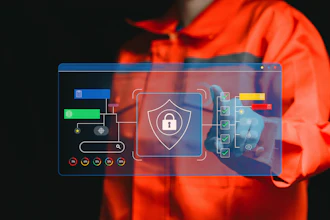
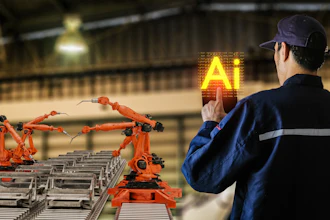
It’s difficult to create a truly interconnected system without a unified, cloud-based control system and a centralized controls platform that can handle multiple systems and devices. Instead of treating automation as an add-on, companies can invest in smart, interconnected systems where machines communicate seamlessly. Cloud-based controls, IoT-enabled sensors and AI-driven analytics help optimize performance and allow real-time adjustments based on production demands and supply fluctuations.
Incorporating Industry 4.0 and using real-time data on machine performance collected by IoT-enabled sensors, operators can fine-tune settings and maintenance schedules. Integrating smart, interconnected systems with real-time monitoring also reduces the need for human intervention, while optimizing the system’s performance.
If there’s an issue with a specific machine or part, the system can automatically adjust production parameters or alert maintenance teams, improving efficiency and reducing downtime. AI-driven analytics can also predict failures before they occur.
 McCownGordon
Space as a Strategic Asset, Not a Limitation
Limited floor space often forces companies to compromise on automation and expansion, restricting growth potential. It can be difficult to meet increased production rates without increasing the size of the machines, which requires additional square footage. But there are a number of ways companies can scale up operations without expanding their physical footprint.
Instead of considering space a constraint, rethink facility layouts. A 3D modeling and simulation strategy, in which a virtual replica of the facility and its systems is created to simulate different layouts, can help optimize space usage before physical changes are implemented. This can be especially useful when determining space needed at transitions, space needed between unit ops or amount of accumulation needed.
Another useful approach is vertical integration, optimizing space by utilizing the available height in a facility. This can involve stacking equipment; rethinking how production lines are organized in height as well as length and integrating various stages of production into a single, cohesive system—reducing the need for expansive floor layouts. Modular solutions can also help companies adapt to growth without sacrificing space.
Leveraging compact, multi-functional equipment and AI-driven warehouse organization maximizes productivity without requiring costly physical expansion. AI-powered warehouse management systems can optimize storage, routing and picking, as well as assist in managing real-time production needs and adjusting warehouse workflows to prevent bottlenecks.
Shifting From Cost-Cutting to Value Creation
Packaging investments are often framed in terms of cost savings rather than long-term value creation, limiting opportunities for innovation. But packaging significantly affects how consumers perceive a brand, and companies that invest in packaging solutions that cater to the consumer experience, whether through innovative designs, eco-friendly materials or user-friendly functionality—can boost brand perception and differentiate themselves.
Companies that prioritize sustainability, material efficiency, and user experience will lead the market. Solutions that reduce waste, incorporate eco-friendly materials and enhance brand perception improve operational efficiency, drive business growth and align with evolving regulatory standards.
Training for Change: The Human Factor in System Upgrades
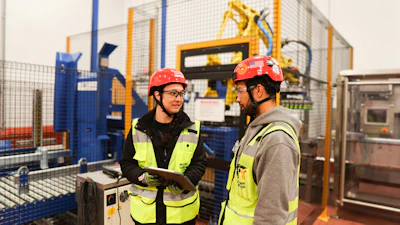
Advanced automation is often implemented without fully considering the workforce, leading to skill gaps and underutilized technology. When introducing new technology, companies need to invest in workforce training programs that prepare workers to operate and maintain the new systems and to make real-time decisions to optimize performance.
For example, when a company adds a robotic system to its packaging line, it should train workers on how to operate and troubleshoot it. If something goes wrong, workers can fix it quickly, reducing downtime. By investing in training, companies help ensure that automation doesn’t sit idle or create problems, but instead enhances the whole operation.
Making Processes Future-Proof
The next era of packaging isn’t just about making processes faster or cheaper—it’s about making them future-proof. Companies focusing solely on efficiency upgrades without considering long-term resilience risk falling behind.
By adopting predictive investments, integrating intelligent automation, optimizing space, focusing on value-driven solutions and prioritizing workforce training, packaging facilities can create systems that meet today’s demands and are built to thrive in the future. The question isn’t whether companies should evolve, but how quickly they can pivot toward a production strategy that embraces adaptability, sustainability and innovation.
Amanda Tran is a design engineering executive at McCownGordon.