Wars in Iran and Ukraine have drained much of the U.S. defense inventory. As “a matter of national security,” the Pentagon has turned to U.S. automakers (namely General Motors and Ford) to support weapons production.
Though details and plans are not yet public, it raises the question: How quickly can American industrial companies shift production from civilian to defense products? What will this shift require?
READ MORE: GM, Ford Asked to Support U.S. Weapons Supply Chain as Wars Drain Inventory
Historically, this conversion has been possible under the right conditions. During World War II, companies across industries rapidly retooled to shift the U.S. Economy to wartime footing:
- IBM and jukebox manufacturer Rock-Ola produced M1 carbines
- Steinway shifted from pianos to glider parts, coffins and even ruggedized troop pianos
- Gibson shifted from guitars to radar assemblies, glider skids and machine gun rods
They were able to do it because they had the machine tools, processes, workforces and material supplies needed to execute on different products. But the conditions that made that possible have changed significantly.
Lack of vertical integration and supply chain visibility will slow conversion
Eighty years ago, the largest industrial companies were much more vertically integrated than they are today. The organizations often owned and directly managed everything from raw materials to the final product, making it faster and easier to shift the flow of materials and activities to other products.
In 2026, the opposite is true. Over the decades, manufacturers optimized for cost efficiency rather than flexibility, leading to dramatic increases in offshoring and specialization. As a result, production is rarely controlled within a single enterprise, but distributed across a multi-tier network of suppliers.
Since today’s industrial firms often rely on complex, globe-spanning supply chains, this creates a fundamental constraint: Even if an automaker can retool its own facilities, it cannot easily reconfigure the broader supply chain that supports production.
That makes it far more difficult to shift production to a military product, even if the manufacturer has the processes in-house. If U.S. automakers and manufacturers begin to shift operations to support defense production, bottlenecks will appear quickly and in predictable places.
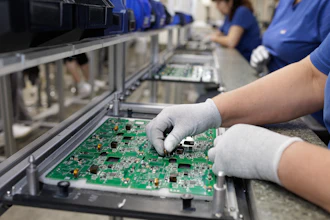
The most immediate constraints are likely to emerge in critical inputs. For example, shortages in semiconductors, even simple ones, can cause enormous disruption, as automakers found out during COVID, when bottlenecks and upstream supply chain constraints limited production.
Beyond semiconductors, other likely bottlenecks include:
- Specialty materials and chemicals, especially energetics (propellants, explosives) and solid rocket motors
- Offshore or specialized components (e.g., batteries)
- Castings, forgings and precision-machined components with tight tolerances (e.g., turbine blades)
A lack of supply chain visibility compounds the effects of these constraints. We don’t know just how bad the problem might be because the Department of Defense lacks visibility into the origins of parts in defense products on a large scale. Without that visibility, identifying and resolving bottlenecks becomes significantly more difficult.
Manufacturing capacity does not equal capability
One of the biggest misconceptions is that available manufacturing capacity can simply be redirected. Hypothetically, Ford could agree to build tanks, but would likely be unable to procure all the parts to do so.
Having factory space, equipment and labor is not sufficient if the upstream supply chain cannot support the shift. Capacity is different than capability — coordination across suppliers, materials and systems will become a limiting factor when assessing defense conversion possibilities.
Additional constraints: regulatory requirements, workforce limitations, industrial depth
Even if supply chain hurdles are addressed, regulatory, workforce and industrial constraints still limit how quickly production can shift.
A vast array of procedural and regulatory requirements has grown far more complex since World War II. Qualification and certification requirements, along with procurement regulations, are all far more extensive and particularly critical for modern defense systems.
Many of these can’t really be waived in the case of precision weapons and munitions, because of their sophistication and tight tolerances. Even when physical production is feasible, these processes can significantly extend timelines.
Labor availability also plays a role. We can’t overlook the difference in labor supply between last century and today. There was a vast industrial labor force back then, which is far smaller and often more specialized today.
It won’t be easy to staff factories scaling up to build defense materiel. At the same time, the industrial base itself is less robust.
The U.S. industrial base as a whole is far shallower and less comprehensive than it was in the 1930s and 40s. We simply don’t have the broad-based depth of supply we had back then and have little excess capacity to absorb sudden demand.
Despite these challenges, some aspects of production are more flexible than they were historically. Digital models and processes make it faster to modify products and production lines and manage changing supply chains. Technology also makes it easier to coordinate across firms.
Additive manufacturing makes prototyping faster and enables small lots of spare parts production. Modern factories tend to be more flexible at the cell and line levels. However, these advantages do not necessarily translate to system-wide responsiveness.
Closing the defense production gap
Acknowledging the problems and recognizing the constraints is only the first step. Effectively scaling defense production through U.S. manufacturers will require coordinated action. Together, industry leaders and government officials should:
- Identify and target for production capability the most crucial bottlenecks (e.g., advanced semiconductor packaging, critical chemicals, specialty metals).
- Thoroughly map the origin of parts and materials for everything we build for defense today, all the way to the base of the supply chain.
- Subsidize capacity in some form, or provide stable demand signaling (purchase agreements, for example).
- Invest in excess capacity. Qualify second sources in advance to make it easier for non-traditional defense suppliers to enter the market.
The most important and hardest thing to do will be to commit to a sustained effort to rebuild our domestic industrial base through a coherent industrial policy.
Until we address these fundamental challenges, rapid defense conversion will remain far more difficult than history might suggest.
Byron Winn is a consultant at Catalant. Byron WinnCatalant