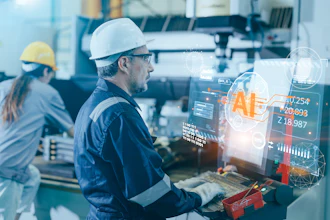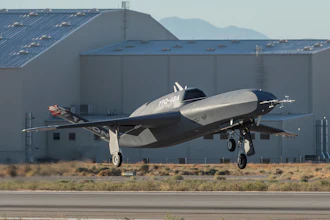
Jeff Bezos’ Project Prometheus has reignited attention around artificial intelligence - but its true significance lies beyond the headlines. Rather than signaling another wave of generative experimentation, Prometheus underscores a deeper shift underway: the rapid acceleration of AI designed specifically for industrial and engineering environments.
This moment marks a transition from AI built for digital convenience to AI built for physical reality -where products must be manufactured, certified, operated safely and maintained over time.
Industrial AI Moves from Novelty to Necessity
For much of the past decade, AI adoption has been led by digital-first use cases: marketing optimization, customer support automation and software development assistance. Industrial sectors have moved more cautiously, constrained by safety, regulatory oversight and the high cost of failure.
Project Prometheus reflects a recognition that these constraints are not barriers to AI adoption - they are the reason industrial AI must evolve differently. In engineering-driven industries, intelligence must be reliable, explainable and grounded in real requirements. Speed alone does not create value if outcomes cannot be trusted or defended.
As a result, investment is accelerating toward AI systems capable of operating inside complex engineering workflows rather than alongside them.
The Data Problem No One Can Ignore
As industrial AI matures, one truth is becoming unavoidable: models are only as valuable as the data they are anchored to.
Unlike consumer or creative applications, industrial AI depends on authoritative information - standards, regulations, specifications, certification criteria and technical requirements that define what is allowable, safe and compliant. When AI lacks access to this foundation, it may generate compelling outputs that ultimately fail in production, audit or operation.
This gap has already surfaced in early deployments. Teams may move faster during concept phases, only to face costly rework when designs collide with regulatory realities. In these environments, intelligence that cannot be traced back to trusted sources becomes a liability.
The next generation of industrial AI will be defined by its ability to reason within engineering constraints, not bypass them.
Why the Digital Thread Is Becoming Essential
One of the most important enablers of industrial AI is the digital thread - a connected framework that links requirements, design intent, validation and operational outcomes across the product lifecycle.
When AI is integrated into this thread, it gains context. It understands not only what can be created, but what must be created to meet safety, quality and compliance expectations. Every team - and increasingly, every AI model - operates from a consistent, shared understanding of requirements.
This consistency is critical as organizations scale AI usage across engineering, compliance, quality and supply chain functions. Without it, intelligence fragments, decisions diverge and risk increases.
With it, AI becomes a multiplier rather than a disruptor.
Balancing Innovation with Engineering Discipline
A defining challenge of the next decade will be balancing innovation, traceability and compliance at scale. Leading organizations are already demonstrating that these forces are not mutually exclusive.
Successful approaches share common principles:
- Grounding AI outputs in authoritative, version-controlled requirements
- Preserving lineage from insights back to source data
- Enabling rapid iteration without losing auditability
- Embedding compliance into workflows rather than treating it as a downstream gate
This convergence allows teams to move faster because they are operating within clear boundaries—not in spite of them. Engineering discipline becomes an accelerator, not a constraint.
What the Next Decade Will Reward
Project Prometheus is not just about advancing AI capability. It reflects a broader realization that the most valuable intelligence is engineered - purpose-built for environments where failure is not an option.
Over the next decade, industrial leaders will be distinguished by their ability to operationalize AI responsibly. Those who succeed will combine advanced models with trusted data, connected workflows and disciplined engineering practices that ensure innovation can scale safely.
In this future, the question will no longer be whether organizations use AI, but whether they use intelligence that is grounded, traceable and fit for the real world.
Because in industrial systems, intelligence only matters if it can ship - and operate.