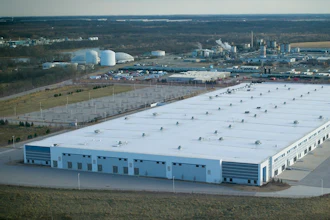
Lockheed Martin this week inaugurated the 88,000-square foot Missile Assembly Building 5 (MAB-5) in Courtland, Alabama. The plant will produce the Next Generation Interceptor (NGI) for the Missile Defense Agency (MDA).
NGI is an open system interceptor that meshes with a layered defense network of space-based sensors, radars, command and control systems and other interceptors.
Its modular architecture also allows rapid incorporation of new technologies. Unlike legacy systems, NGI upgrades can be performed while the missile remains in its silo, avoiding costly removal and replacement.
NGI is moving from design to production, with key elements of the system advancing through development test and integration. Core technologies, including the interceptor's engagement capability, sensors, software and propulsion, are demonstrating system-level performance and operation ahead of Critical Design Review (CDR).
MAB-5 will streamline workflows, cut unnecessary handling and support tighter tolerances required for complex components. Integrated digital tools link design data directly to the factory floor, bolstering configuration control, quality assurance and repeatability as production scales.
The opening of MAB 5 underscores Lockheed Martin's commitment to North Alabama as a hub for deterrence and defense. The company has been present in the region since 1963 and has been producing defense systems in Courtland since 1994.
Lockheed Martin's Troy, Alabama, facility will also support NGI production through hardware integration and large-scale manufacturing.