Stellantis today announced plans for a strategic initiative with Accenture to advance the use of AI-enabled digital twin capabilities using NVIDIA technologies across its global manufacturing footprint.
The project brings together Stellantis' industrial expertise, Accenture’s physical AI and digital manufacturing capabilities, and NVIDIA’s accelerated computing and Omniverse libraries to explore the development of next-generation virtual manufacturing environments powered by real-time data and artificial intelligence.
“We are laying the foundation for the next generation of manufacturing at Stellantis,” said Francesco Ciancia, Head of Manufacturing at Stellantis. “By combining digital twins, AI and advanced simulation, we are rethinking how we design, operate and continuously improve our production systems."
Ciancia said the initiative is designed to enhance the automaker's ability to anticipate issues, enable faster decision-making, and support continuous improvement.
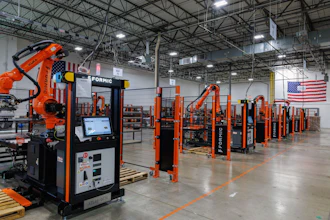
Stellantis is using high-fidelity virtual plant replicas to optimize operations in real time through AI-driven insights, accelerate industrialization by validating processes before physical deployment, enhance quality through predictive monitoring, and reduce risk across manufacturing operations.
Initial deployments are planned in selected plants, providing a foundation to assess value creation and scalability across the broader industrial network, starting with pilots in North America in 2026.
The partners aim to explore how AI-integrated digital twins can enable closed-loop optimization, in which virtual and physical manufacturing systems continuously inform and improve one another. This is supported by agentic orchestration for dynamic throughput optimization, as well as physics-informed quality and maintenance.