EL SEGUNDO, Calif. — Boeing and its subsidiary Millennium Space Systems are expanding space production capacity and broadening their satellite portfolio to help government and commercial customers field capability faster and with greater flexibility.
The dual approach is intended to meet rising demand across defense and commercial space markets for architectures that can scale more efficiently, adapt as mission needs change and move faster from concept to orbit.
By combining Boeing’s payload and mission expertise with Millennium’s rapid production approach and common products, the teams are increasing throughput while expanding the range of mission-ready options available to customers.
Boeing is targeting 26 satellite deliveries in 2026 as it works to increase output across its space portfolio. The production focus is being supported by investments in common products, repeatable manufacturing approaches and integration across Boeing and Millennium products.
As part of that effort, Boeing and Millennium are announcing Resolute, a new mid-class satellite platform designed for missions that need more capability than a traditional small satellite can provide, with greater speed and flexibility than a typical large satellite program.
Built on Millennium common products and flight-proven avionics with on-orbit heritage, the platform is intended to provide customers with a more adaptable option for communications, sensing, and other mission needs across multiple orbital regimes.
Millennium has a growing backlog. The company’s production model is designed to support higher-rate manufacturing while preserving the flexibility to tailor spacecraft for specific missions.
Boeing acquired Millennium about eight years ago. The plane maker was drawn to Millennium's vertically integrated small-satellite solutions and to how they could complement Boeing's existing satellite portfolio.
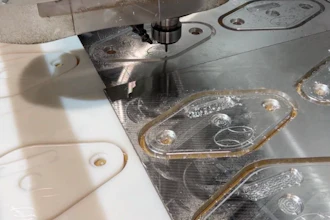
About four years after the acquisition, Boeing opened a high-throughput small-satellite production, integration and test facility at its El Segundo facility. The companies applied advanced and additive manufacturing techniques, including 3D printing entire space-qualified satellite buses, to offer faster cycle times while improving performance.