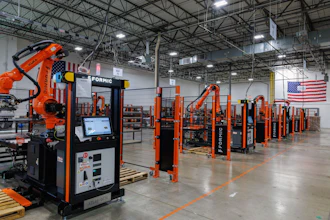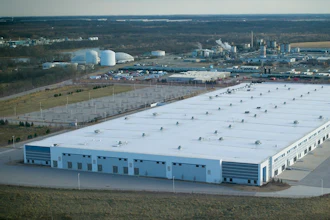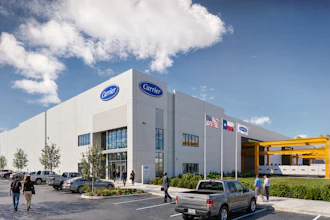
Hon Hai Technology Group, the Taiwanese company commonly known as Foxconn, announced an additional $569 million investment in Wisconsin designed to expand the company's manufacturing footprint in the Badger State. The electronic manufacturing service provider noted that the development would help meet rising demand from U.S. customers and strengthen domestic supply chains.
The company stated that the Wisconsin Economic Development Corporation (WEDC) Board of Directors approved the amended project, which expects to create nearly 1,400 jobs over the next four years in Mount Pleasant. As part of the new contract, WEDC will provide up to $16 million in additional performance-based tax incentives.
"Wisconsin accounts for close to a fourth of our workforce in America, and this second-stage project will double that presence in the state by the end of this decade," Foxconn Chief Product Officer and General Manager of Hon Hai USA Jerry Hsiao said.
Foxconn’s operations in Wisconsin began in 2017 as a proposed LCD screen manufacturing site that would create 13,000 jobs. However, the company and state reworked a $2.85 billion incentive agreement in 2021 after the factory never materialized as expected.
In 2021, the company and WEDC approved a change that enabled Foxconn to earn up to $80 million through the state's Electronics, Information Technology and Manufacturing Zone (EITMZ) program by the end of 2025, based on the company’s planned investment of $672 million and creation of approximately 1,400 jobs by Dec. 31, 2025.
Under the new expansion, Foxconn can reportedly earn up to $96 million in EITMZ credits through Dec. 31, 2029. The amended contract calls for the company to create a total of 2,616 jobs and make $1.2 billion in capital investments by then.
WEDC verified that, as of Dec. 31, 2024, Foxconn had invested nearly $717 million in its Mount Pleasant operations and created nearly 1,200 jobs, which qualifies the company for $62.9 million in tax credits. WEDC also confirmed that, in 2024, the company invested $34.5 million in eligible capital expenditures and earned $10.5 million in job creation and capital investment credits.