We are in a worldwide stampede toward artificial intelligence (AI). Al has experienced exponential investment and growth over the last decade. The amount of money being poured into AI is breathtaking. Between 2013 and 2024, cumulative global corporate investment in Al reached nearly $1.6 trillion, with annual investments growing more than 13x during that period.
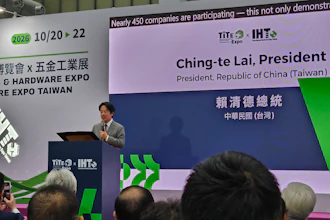
The Trump administration is totally supportive of AI, and President Donald Trump issued Executive Order 14179, "Removing Barriers to American Leadership in Artificial Intelligence,” to “sustain and enhance America's global AI dominance.” The Trump administration believes that winning the AI race will usher in an industrial revolution, an information revolution and a renaissance—all at once. Trump wants no or limited guardrails in the pursuit of AI dominance.
The Benefits of Al
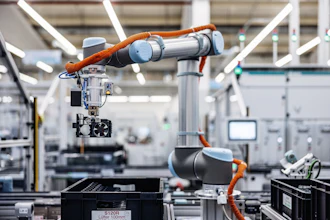
Al is supposed to reduce operational expenditures, lower overall supply chain costs, reduce labor costs and eliminate jobs. Studies suggest an average of 25% labor cost savings, projected to reach 40% in the coming decades. Supply chains are supposed to deliver double-digit cost reductions.
The financial idea is that the savings are then reinvested into higher supply chain autonomy, creating a cycle that strengthens resilience and fuels growth, turning Al adoption into a self-funding engine.
Al is also expected to improve planning and execution while automating routine tasks, allowing workers to take on higher-value roles.
The Downside of AI
AI presents many potential risks, and there are significant downsides. These drawbacks range from immediate issues such as job displacement and ethical dilemmas to long-term existential threats such as accelerating climate change and the spread of misinformation.
What About the Workers?
Despite all of the hoopla about the wonders of the new technology, the primary objective of most companies is cost reduction. AI-powered automation is expected to displace millions of workers, particularly in manufacturing, customer service, and data entry roles.
According to Forrester research and Goldman Sachs projections, U.S. job losses due to AI by 2030 generally range from 6% to 7% of the workforce, or roughly 10.4 million jobs. Manufacturing will be a big loser again, but this time, white-collar workers and college graduates will suffer. A high-end estimate suggests that up to 19.5 million U.S. jobs could be displaced within 2 to 5 years, depending on the pace of adoption. Goldman Sachs research, led by Joseph Briggs, estimates that 300 million jobs worldwide are at risk of automation by AI.
Since 2000, automation has already resulted in the loss of 1.7 million U.S. manufacturing jobs, with AI accelerating this trend. This figure, commonly cited from an Oxford Economics study (and similar analysis from Ball State University), highlights how industrial robots and automation technologies have reduced the need for human labor particularly in repetitive physical tasks. A 2019 Oxford Economics report projected that robots could replace 20 million manufacturing jobs worldwide by 2030, with significant impacts on the U.S. automotive and electronics sectors.
If the Goldman Sachs projection that 6% to 7% of workers—roughly 10 million to 11 million jobs in the U.S.—are displaced by AI over the next decade comes true, it would represent a massive structural shift in the labor market. The scale of this displacement is expected to eclipse that of the 2008 Great Recession. Unlike typical recessions, when employees are rehired during economic recovery, AI-driven job losses will be permanent.
Another danger is that, along with massive job losses, consumer spending will drop proportionately. Consumption is the most powerful engine of the economy, and it could reduce GDP growth. AI could lead to a white-collar bloodbath and dramatically increase economic inequality.
While some projections warn of severe disruption, Goldman Sachs' baseline scenario suggests a transformative, rather than apocalyptic, outcome, characterized by a shift in the workforce rather than mass, permanent unemployment. During the transition to the post-industrial service economy, economists also said that the workforce would shift to more productive uses, allowing more efficient industries to thrive and bringing higher wages, job creation, and a more vibrant economy overall.
However, data from the Job Quality Index showed that the economy produced many jobs, but they were increasingly “low-quality” service jobs. Since 1990, America has cumulatively added some 20 million low-quality jobs, versus around 12 million high-quality ones. In short, the U.S. economy has shifted toward creating more bad jobs than good jobs. This does not bode well for workers whose jobs will be eliminated by AI.
Another issue is that many displaced workers will not be suited to do the advanced AI jobs that are created. This is particularly true for workers with a high school diploma or less. In addition, corporations and the government may not fund or provide reskilling programs, leaving a skills gap that increases long-term unemployment.
The U.S. government lacks a comprehensive plan to address the potential elimination of 10.4 million jobs by AI, with many officials and experts warning that policy responses are lagging behind the rapid pace of technological adoption.
Economic Inequality
We know from the last 50 years that radical economic changes, such as outsourcing, have led to job loss, a decline in real annual wages and growing inequality. According to the Economic Policy Institute, the top 1% of earners experienced a 160.3% increase in wages, while the bottom 90% grew by only 26.0% over the 40-year period, from 1979 to 2009.
The development of AI with the corresponding job losses could be a one-sided economic change that rewards capital at the expense of labor. The benefits of Al may disproportionately favor wealthy individuals and corporations, increasing the income gap and widening the divide between those with Al skills and those without.
Customer Service
Do you remember the days when you could get a real person on the phone? She could tell you if Joe Miller was in his office or in the restroom, or transfer you to another person that could discuss your problem and offer solutions. The communication allowed you to ask all of your questions and sort through the best solutions with another human.
Today, when you call a company, you get a virtual assistant with only minimal programmed answers, and there is no problem analysis or discussion. If there is a human alternative, it’s likely to be outsourced to a third party.
AI Will Eliminate the Human Touch
Humans excel at offering personalized, flexible and comforting interactions that transform, rather than just process, customer interactions. Specific advantages include:
- Humans can read, validate and respond to a customer's feelings, reducing tension and turning frustrating experiences into positive ones.
- Human agents can think critically to solve non-routine or complicated issues that fall outside of a chatbot's programmed script.
- Personalized, human-to-human interaction fosters deeper trust and a higher likelihood of repeat business compared to automated systems.
- For expensive or complex purchases, such as capital equipment, human interaction provides the reassurance and detailed, expert advice needed.
- An empathetic human can apologize effectively and offer tailored solutions to rescue a customer experience that has gone wrong, preventing customer loyalty loss.
But the goal of the new AI is to reduce human touch and automate all customer service. Do AI developers think they can improve the technology to the point that it achieves the human touch capabilities listed above? The equivalent of a discussion with a HAL 9000 computer. Or are we going to have to speak to programmed virtual assistants with intelligence just above that of a common squirrel? Will customer service continue to decline—as it has for 40 years?
Lean Manufacturing and Quality Programs
What about the customer satisfaction guarantees of lean manufacturing and quality programs (like Six Sigma)? These programs define customer satisfaction as delivering maximum value by providing exactly what is needed, when needed with zero defects and minimal waste.
They emphasize designing processes around the voice of the customer, focusing on quality, speed, and consistency to build long-term loyalty. If AI succeeds in eliminating the human factor and makes it harder for customers to find a solution, it contradicts Lean and other quality programs.
Surveillance, Privacy and Security Problems
Everybody who has a computer knows that phishing attempts are made every day to get your password or private information. Generative AI will enable cybercriminals to automate, personalize at scale, and create hyper-realistic content, such as voice/video deepfakes, which increases the success rate of stealing credentials or funds.
AI systems require vast amounts of data, often collected without consent, raising serious concerns about surveillance and the protection of personal information. The new AI technology will help bad actors develop more advanced cyberattacks, steal data and bypass security measures.
AI developers and cybersecurity experts are adopting a "counter AI with AI" approach, building multi-layered defenses to prevent bad actors from using advanced AI to accelerate cyberattacks, steal data and bypass security. Key initiatives include strengthening AI model guardrails, automating threat detection, using "red teaming" to find vulnerabilities before attackers do and implementing strict governance frameworks to stop data poisoning.
Despite these measures, experts acknowledge that AI detection tools will only work some of the time, and the rapid pace of development means detection systems will likely not keep up with cybercriminals.
Guard Rails and Protection
AI poses significant threats and risks, so the question is whether the government can develop guardrails that protect the citizens.
The Biden Administration implemented comprehensive guardrails on AI primarily through a sweeping October 2023 Executive Order (EO 14110) and subsequent agency actions, focusing on safety testing, security and equity. The cornerstone of this approach was requiring developers of the most powerful AI systems to share safety test results and other critical information with the government.
Key guardrails and actions included:
- Infrastructure Security: The Department of Energy was tasked with assessing AI risks to critical infrastructure, including nuclear, chemical and biological threats.
- Mandatory Safeguards: Federal agencies were required to implement specific, binding safeguards on Al tools by December 1, 2024, to prevent risks to the public.
- Chief AI Officers: Agencies were required to designate a Chief Artificial Intelligence Officer to oversee compliance with safety standards.
- Watermarking: The Department of Commerce was directed to develop standards for watermarking AI-generated content to combat deepfakes and fraud.
- Privacy Protection: The administration prioritized funding for privacy-preserving techniques and required agencies to survey their use of personally identifiable information (Pll).
- Anti-Discrimination Measures: Agencies were directed to provide guidance to landlords, federal contractors, and benefits programs to prevent AI-enabled discrimination.
- Labor Market Impact: The Administration directed studies on how AI affects the workforce, aiming to protect against job displacement and hiring bias.
- Al Safety Institutes: The Administration established an Al Safety Institute within the National Institute of Standards and Technology (NIST) to lead testing, evaluation, and international collaboration.
Trump Revokes the Order
On his first day in office in January 2025, President Donald Trump revoked President Joe Biden's October 2023 Executive Order (EO 14110) on the "Safe, Secure, and Trustworthy Development and Use of Artificial Intelligence," effectively dismantling the primary framework for federal AI regulation. The Trump administration replaced it with a focus on deregulation, calling the previous order "dangerous" and a hindrance to innovation.
The revocation of President Biden's executive order indicates a significant shift away from a centralized federal regulatory framework toward a "pro-innovation" and "hands-off" approach to AI development at the federal level. The new government approach will dismantle Federal Regulation, make safety standards voluntary and shift the responsibility for AI regulation to the states.
This action signifies that the government is moving away from regulating the development of AI models toward encouraging rapid growth and voluntary compliance, aiming to "win the AI race" without stifling innovation through government bureaucracy.
I think it is safe to assume that there will be a very limited government effort to develop protective guard rails and that much of the downside will become a reality.
Looks like we citizens are on our own with little protection.
Michael Collins is the author of a new book, "The Globalization Trap," now available on Amazon. He can be reached at [email protected] or on mpcmgt.net.