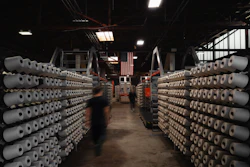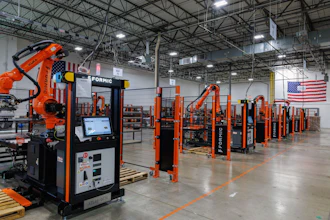
Economists largely favored the transition from a manufacturing-based to a service-based economy in the late 20th century, as it was seen as a natural, progressive evolution of advanced economies that promised higher efficiency, increased wealth, and improved living standards.
Many economists viewed the decline of manufacturing as an example of creative destruction, in which capital and labor move from older, less efficient industries to newer, more productive, innovative ones. Economists also supported outsourcing labor-intensive manufacturing to countries with lower labor costs. The transition was seen as a way to create a more resilient and diversified economy, reducing dependence on the boom-and-bust cycles associated with heavy industry.
Why did economists favor the transition from manufacturing to service?
Many economists and academics jumped on the “post-industrial” bandwagon and have tried to convince most citizens that the transition to the post-industrial service economy is a good thing. The argument goes like this: The U.S. benefits from cheaper goods, and these imports lower prices and costs for consumers, enabling them to buy more. But imports have not delivered on the promise of substantially lowering consumer prices, improving living standards or helping the citizens now living paycheck to paycheck.
In 2005, The Economist published an article that summarizes the prevailing belief about manufacturing employment. The article, titled “Industrial Metamorphosis,” said, “Factory jobs are becoming scarce. It’s nothing to worry about.”
The article goes on to say that the issue is not whether people work in factories, but whether they create wealth. In developed economies today, telecom, software, banking, and so on can create more wealth than making jeans or trainers. Before long no one will care much whether firms are classified under manufacturing or services. Future prosperity will depend not on how economic activity is labeled, but on the economy’s ability to innovate and adjust.
Rationalization for the transition
Supporters of globalization and the post-industrial service economy believed that free trade and market forces would shift the workforce to more productive uses, allowing more efficient industries to thrive and bringing higher wages, job creation, and a more vibrant economy overall.
Shift the workforce to more productive uses
The following job quality index shows that millions of workers were not shifted to more productive uses.

The index shows that the economy has produced a lot of jobs, but they are increasingly “low-quality” service jobs. The quality of new jobs has been decreasing for 30 years. In 2022, the JQI was approximately 81, indicating that there were 81 high-quality jobs for every 100 low-quality jobs.
The reason is obvious: lost manufacturing jobs were replaced by lower-wage/lower-hours service jobs. Since 1990, America has cumulatively added some 20 million low-quality jobs, versus around 12 million high-quality ones. In short, the U.S. economy has shifted toward creating more bad jobs than good jobs. This does not bode well for middle-class workers with a high school diploma or less.
Job creation
The Bureau of Labor Statistics (BLS) projects that 53% of jobs in 2034 will have a median annual wage of $46,945. Some 47% of the total in 2034 will have a median annual wage of $111,855. With few exceptions, almost all of these higher-paying jobs are white-collar positions that require a bachelor's or master’s degree. The problem is that 65% of all workers have a high school diploma or less.
Living Standards
The MIT Living Wage Calculator, based on an analysis of 2025 data, shows that a "living wage" for a family of four often is around $100,750 to $107,000 in many states, covering housing, groceries, child care, transportation, healthcare, and taxes. A 2025 SmartAsset study found that a family of four needs to earn around $106,903 a year to cover necessities.
The BLS data suggest that workers earning less than $50,000 per year are in trouble and do not have family-wage jobs with wages to raise families or pay enough to improve their living standards. Workers with a high school diploma or less who transition to the service industries are more than likely to see a reduction in income and benefits.
Allowing more efficient industries to thrive
Two of the service industries with the most growth are leisure and hospitality, and healthcare and social assistance. Employment in these sectors has grown robustly since 1990, with food services and drinking places as a major driver. The industries are mostly composed of low-quality service jobs.
According to the Bureau of Labor Statistics, for the period of 2001 to 2024, 36 out of 38 NAICS manufacturing industries, establishments engaged in the mechanical, physical, or chemical transformation of materials, substances, or components into new products, continued to lose factories and employees.
Wage growth
A March 2026 report from the Institute for Policy Studies (IPS) titled "America's 20 Largest Low-Wage Employers and the Affordability Crisis,” dubbed them the “Low-Wage 20.”
Together, the Low-Wage 20 companies employ approximately 6.7 million people in the U.S. The median wage at 75% of companies is lower than the income threshold for a family of three to be eligible for Medicaid in most states. Nearly a quarter of Walmart employees (29.3%) and half of Amazon employees were on Medicaid in 2024, according to the report. In 4 states, 10,920 Walmart workers and 9,633 Amazon workers were enrolled in SNAP (food stamps). In this report, we find that most of these firms pay their workers so little that employees are forced to rely on public benefits like SNAP and Medicaid.
A more vibrant economy
The smooth transition to the service economy has become a very rough road, leaving many voters angry and frustrated. The American social contract, a promise of opportunity and security for those who act responsibly, is fundamentally broken. For working Americans, particularly workers with a high school diploma, it became a race to the bottom.
The failure of the service economy
I will argue that there is growing evidence that the postindustrial service economy will not deliver the wages, living standards, or economic growth promised by most economists. Instead, the transition to the service economy has led to the decline of much of the middle class.
The first example of the decline is Figure 3, which shows the middle-class share of national income declining since 1967. This 7% loss is equal to $3 trillion of lost income.
According to a Pew Research Center analysis of government data, the share of adults who live in middle-class households fell from 61% in 1971 to 50% in 2021.

Figure 3-2 shows the cumulative change in real annual wages, by wage group, from 1979 to 2019.
The top 1% of earners experienced a 160.3% increase in wages, while the bottom 90% grew by only 26.0% over the 40-year period. The top 0.1% saw even faster growth, with wages increasing by 345.2%. This long-term trend led to serious inequality and the widening wage gap between the top and bottom earners.
Winners and losers
All Presidents, from Reagan to Biden, Republican and Democrat, supported free trade, outsourcing, the transition to the service economy, and the loss of manufacturing jobs. The problem with economic theories is that they always cover up or downplay what happens to the losers. The government knew there would be losers, but believed that the benefits outweighed the downside. For millions of workers, the transition to the service economy meant being pushed into low-wage jobs and a slide into economic oblivion.
The problems caused by outsourcing and the loss of manufacturing
In addition to the problems suffered by the losers, many other problems arise from the loss of manufacturing.
Shortages
Outsourcing manufacturing has created a dependency on imported products, such as pharmaceuticals, minerals, metals and components for weapon systems, from China and other Asian countries. We are now dependent on India and China for generic pharmaceuticals, which account for 91% of all prescriptions written in the U.S.
Mining minerals and metals is the front end of nearly every manufacturing supply chain, from smartphones and computer chips to renewable energy technologies and fighter jets. We now depend on imports for nearly 50 essential minerals and metals—and are 100% reliant on imports for 18 of them.
The U.S. is currently in a dangerous position where a foreign competitor could cut off our imports, harming U.S. industries and consumers. We are victims waiting for the hammer to drop.
Decline of U.S. manufacturing industries
Since 1980, Republicans and Democrats have watched the relentless disintegration of critical manufacturing industries from computers and smartphones to aluminum and Class 8 trucks. So, the big question is, can the U.S. afford to allow our industries to continue to deteriorate until we are totally dependent on imports, or rogue countries like China?
I have been following manufacturing industries for many years (2002 to 2020) in the BLS database, tracking changes in employment and establishments. Those people who think we might be in a manufacturing renaissance because of the digital revolution need to take another look. The BLS data shows that 38 critical manufacturing industries are declining in both the number of plants and the number of employees. The biggest problem, as shown in Bureau of Labor Statistics data, is that seven of these industries are critical to the manufacturing process and absolutely essential if America wants to retain a viable manufacturing sector. These are industries like machining, machine tools, mold making, tool and die, semiconductors, forging, and foundries. It is difficult to see how we can ever achieve a manufacturing renaissance or maintain an industrial sector while these critical industries continue to decline.
Innovation
Everybody agrees that future economic growth and international competitiveness depend on our capacity to innovate. In 2015, President Obama said, “America’s future economic growth and international competitiveness depend on our capacity to innovate.” His plan, The Strategy for American Innovation, also said, “Innovation-based economic growth will bring greater income, higher quality jobs, and improved health and quality of life to all U.S. citizens, and provides a multifaceted, common-sense, and sustained approach to ensuring America’s future prosperity.”
But Obama didn’t acknowledge that most of our inventions and technologies are no longer manufactured in America. So, American companies did the research and development of the original products, but then allowed them to be manufactured in foreign countries. The same process goes on today, but we are not only losing technologies; we are losing whole industries.
An innovation strategy is a noble idea, but we are losing new products and technologies through outsourcing and technology-transfer agreements. If we can't reverse this trend, then a strategy of innovation is moot.
The key to an innovation strategy is R&D. What most people don’t know is that manufacturing funds 70% of all private R&D, and as manufacturing declines, so does the strategy of innovation. The service sector contributes little to R&D, so the only real hope for an innovation strategy is to stop the decline of manufacturing.
The export myth
In 2014, President Obama set a goal of doubling exports, but it failed. He didn’t seem to understand (or ignored the fact) that our competitors were manipulating currency to keep our dollar overvalued, which made our export prices non-competitive. Obama and many other politicians believed that free trade agreements could increase our export sales. They bought into the export myth and the four-decade illusion that opening foreign markets would deliver prosperity, and that the U.S. would get its fair share of trade. Instead of export growth, America got record trade deficits, loss of millions of jobs, and the wealth going to the top 1%. The only chance for export growth is to realign the dollar and reshore manufacturing.
Many post-election surveys in 2025 indicate that the number one problem for working-class workers is inflation and the cost of living (affordability). Today, millions of middle-class citizens are worried about rising prices and inflation, as was evident in the 2024 election when they voted with their pocketbooks.
Many economists believed that the service economy and cheap imported goods would drive economic growth, create good jobs and improve living standards for the middle class. Alas, it just didn’t happen for the majority of the middle class. The low prices of imported goods were not enough to offset stagnant wages and rising living costs for most workers. If the transition to a service economy was such a good idea, why are so many people fearful, unhappy and living paycheck to paycheck?
We need to abandon the transition to the post-industrial service economy before it is too late, and focus on reshoring manufacturing.
Michael Collins is the author of a new book, "The Globalization Trap," available on Amazon. He can be reached at [email protected] or on mpcmgt.net.