We all know that old expression, “the more things change, the more they stay the same.”
While manufacturers face daunting challenges, many turn to technology to enhance their ability to respond effectively. In 2026, that means we discuss AI. A lot.
And while we are seeing many purpose-built AI technologies making an impact on the industry already, the buzz surrounding it might actually overshadow the advancements in automation in both technology and adoption – technology that’s truly driving manufacturers forward right now.
A3 - the Association for Advancing Automation - released its annual industry report in February of 2026, revealing significant increases in automation technology investment.
According to A3, robot orders grew by 6.6% in 2025 compared to the prior year, with 36,766 robots ordered across multiple industries, for a total value of $2.25 billion.
Notable was the shift in industry representation when it comes to demand. There was a time where the automotive industry represented the lion’s share of automation investment – and it really wasn’t even that long ago. This left many industries – including verticals in manufacturing that could benefit greatly from automation – still sitting out more sizable investments.
But this year’s report suggests that’s changed. A3 said robot demand from non-automotive customers actually outpaced demand from automotive companies in 2025. They cited strong momentum from industries like food, consumer goods, semiconductors and electronics.
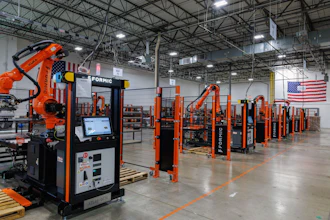
I recently returned from the MODEX material handling trade show in Atlanta and the question of the moment is most certainly AI. Equipment manufacturers were more than happy to talk about ways in which artificial intelligence was enabling their products in various ways, but I found it interesting how much the conversations with these vendors still centered on the basic foundation that’s come to define the smart factory: automation.
And the conversations around AI tend to focus on efficiency – how to do more with less – the conversations around automation seem to emphasize problem-solving.
And since problems abound, this need for equipment to correct the biggest critical challenges dovetails with what A3 is seeing as well.
According to Alex Shikany, Executive Vice President of A3, the rebound in robot orders “reflects renewed confidence in automation as a long-term solution to competitive pressures.”
This statement struck me. Is automation – once the scary, expensive, job-killing prospect so many manufacturers saw – now the tried-and-true? Has automation finally paid its dues in order to become the safe and secure baseline upon which manufacturers operate?
Let’s hope so. Because, as Shikany elaborated, it’s carrying a lot of water for the industry: While many sectors pursue automated solutions, it’s with problem-solving in mind, including productivity and worker shortages – even to manage reshoring initiatives.
So automation as the problem-solver has finally proven itself to the manufacturing industry and the folks at MODEX made that clear with features and capabilities that were laser-focused on addressing customer needs. The goal of assembly line robotics for large-volume, repetitive tasks is one thing, but the automation industry brought that and so much more.
To understand the kinds of capabilities we’re seeing in automation, I’d suggest you check out the MODEX ‘26 show recap on page 22. But if you want to double down, check out AUTOMATE ‘26 – North America's largest robotics and automation event – in June. Produced by A3, this show floor features hundreds of exhibitors touting solutions that include robotics, motion control, vision systems and - yes - AI.
For more information on AUTOMATE, visit www.automateshow.com.