By 2028, U.S. data centers could use as much as 12% of the country’s electricity – compared to about two percent before 2020. At the same time, traditional energy contracts aren’t structured for this type of rapid growth, which is creating ripple effects down the supply chain to manufacturing.
Boston Consulting Group has reported that lead times for acquiring critical equipment, such as backup generators, have increased from months to years.
Traditional manufacturing systems were built for steady-state scaling, rather than hypergrowth – and the demand for AI is outpacing the capacity. To power the AI boom, factory floors are getting smarter, more modular, and more connected.
Demand Outpacing Supply
While utilities and contracts are just one impediment data centers face, supply chain disruptions for manufacturing energy-transmitting components are an even more critical hindrance.
Switchgear and PDUs create the essential foundation for managing and distributing safe, reliable power to data centers. Yet many manufacturing operations are still relying on offshore operations or are constrained by outdated, legacy production systems and capacity.
Further exacerbating manufacturing slowdowns is the shortage of skilled labor. A recent report found that as many as 3.8 million net new employees are needed in manufacturing between 2024 and 2033, and that around 1.9 million jobs could remain unfilled without a solution to the talent gap. However, the modernization of factories, the development of future talent, and nearshoring and onshoring of manufacturing are helping ease these bottlenecks.
 Mission Critical Group
Creating the Factories of the Future
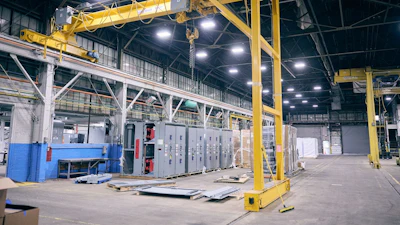
Meeting the surge in demand goes beyond just scaling production. It requires companies to rethink how power systems are built to eliminate as many inefficiencies as possible – and that starts with revolutionizing factory floors.
The same AI transforming data centers is also being used to transform the factories that help build them, modernizing and future-proofing their operations through:
- Modular and prefabricated systems: Creating standardized power modules, containerized systems, and configurable switchgear reduces lead times and improves system reliability. Prefabricated modules can be built simultaneously as site preparation is underway, helping cut project timelines, while standardized builds create repeatability and consistency by reducing variation and improving quality control. Finally, modular systems can scale more easily. They can be added to, swapped or upgraded as needed without redesigning an entirely new system.
- Digital twins and predictive analytics: Modern factories are using solutions such as AI and sensor-driven systems to minimize production defects by identifying issues earlier. Digital twins can simulate performance and ensure components are reliable and can meet the demands of data centers. From temperature changes to various voltages and fault conditions, digital twins can also help manufacturers test component performance before production even begins.
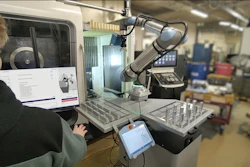
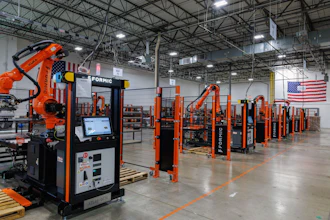
- Automation and workforce augmentation: Human workers are being reskilled or upskilled to work alongside new technologies like AMRs (autonomous mobile robots) and AGVs (autonomous guided vehicles) on connected networks. These technologies can streamline heavy assembly, free up skilled talent for more complex tasks and be used to handle situations that could be unsafe for workers.
- Smart testing and validation: While quality control in the field used to be the final step in a manufacturer’s testing cycle, the power requirements of data centers have placed added emphasis on reducing downtime – and increasing testing validation efficiency. Smart testing and simulation enable manufacturers to test equipment in real-world conditions on the factory floor by running switchgear, PDUs and backup systems through the same fluctuating high-density power loads they’ll be supporting in data centers.
- Supply chain resilience: Manufacturers operating in today’s supply chain understand that agility is no longer an option; it’s imperative. The demand for data centers has only emphasized the importance of creating a regional supply chain network that focuses on modularization and shortens lead times.
- Partnership with skilled training programs: Human expertise is as essential as the machinery that builds parts. Switchgear and power system assembly lines require skilled technicians who understand both traditional electrical work and modern automation. Manufacturers that collaborate with training programs that specialize in industrial technology, electrical trades and robotics engineering not only influence the training of the next generation of talent with the exact skills needed for their operations, but they can also build a robust talent pipeline to fill those roles.
 Mission Critical Group
The Road Ahead
Modernizing factory floors to support components that power data centers isn’t just about scaling production capacity and digital transformation through automation – it’s about building standardization, efficiencies, and reliability into every stage of the manufacturing process.
Integrating automation, digital testing, and skilled workforce development is shortening delivery timelines, ensuring data centers come online more quickly and reducing downtime once they’re up and running.
But this transformation is only the beginning. The next evolution of manufacturing will continue to advance technology and sustainability across the production lifecycle, because at the end of the day, AI can only move as quickly as the systems that power them – and those systems are only as resilient as the factories that build them.