Drone technology has upended warfare since its inception in World War I. While it already represents the cutting edge of major military powers’ capabilities, it is still evolving. Armed conflicts in Ukraine and the Middle East have given next-gen military drone technology a proving ground, demonstrating the potential of modern engineering innovations.
The Past and Future of Military Drone Designs
The first pilotless aircraft were crude and bulky. Its origins can be traced back to World War I, where it was used for reconnaissance. This experimental, radio-controlled design is a far cry from today’s sleek, sophisticated devices, but it served its purpose as a proof of concept. Over time, they have undergone considerable evolution.
Advances in miniaturization, automation and GPS transformed these machines into modern military surveillance tools. Recent armed conflicts have demonstrated their value on modern battlefields under real-world conditions.
One market research firm predicts the military unmanned aerial vehicle (UAV) market will reach $98.24 billion by 2033, up from $47.38 billion in 2025. As of 2025, the United States military dominates with an 85% market share. However, this may change as rapid prototyping lowers the barriers to entry.
The U.S. has maintained market dominance in part due to its robust workforce. Aerospace engineering has long been among the most popular engineering careers. Industry professionals get to design and develop next-gen military drones, missiles and satellites. The field’s heightened popularity has contributed to innovation speed and diversity.
Cutting-Edge Capabilities Redefining Combat
Since military drone design engineering advances rapidly, many advanced technologies are already being phased out in favor of newer, superior ones. For instance, 6G is expected to replace 5G equipment within the next few years. Artificial intelligence is revolutionizing automation, enabling applications to move beyond remote control.
Propulsion systems are another popular topic of discussion. Miniaturized turbines, remote control systems and electric motors could revolutionize aerial combat and surveillance. In 2025, jet and turboprop engine manufacturer GE Aerospace developed two engines capable of delivering 1,500 pounds of thrust to advanced UAVs and collaborative combat aircraft.
Hybrid electric systems with high energy densities enable persistent communication and surveillance over long distances, facilitating ultra-long endurance flights. Developing all-electric drones has posed challenges because batteries add substantial weight and occupy significant space, straining the propulsion system and resulting in a bulky airframe.
Moreover, recharging is time-consuming. Solar panels offer an acceptable alternative, yet their efficiency varies depending on the sun’s angle and weather conditions. A battery-free UAV could sustain ultra-long-term missions by passively harvesting energy and storing it in a lightweight capacitor array that lasts millions of charging cycles, while intelligently regulating usage.
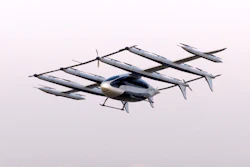
With machine learning and battery-free systems, militaries could use swarms to provide cover or rapidly strike targets. Currently, deploying them is difficult because they require ultra-low latency and intelligent sensing. Personnel could coordinate thousands of drones’ movements in real time without organizing large-scale refueling or recharging movements.
Looking Inside the Military’s Next-Gen Drones
The General Atomics MQ-9 Reaper has long been seen as the premier remotely piloted aircraft for surveillance and reconnaissance. The newer MQ-9B model — designed for all-weather operation — can stay airborne for 40 hours, roughly 10 more than its predecessor. It has multimodal radar and advanced electro-optical/infrared sensors, enabling multidomain operation.
While the MQ-9 Reaper is advanced, it does not represent the future of military drone design. Since only a small fraction of surveillance missions require strike capabilities, there is no need to fly an expensive, fully outfitted machine when a smaller, more modular model will suffice. They have the added benefit of being faster, lighter and more cost-effective to produce.
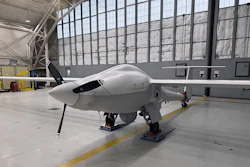
The glider-like Ultra-Long-Endurance Tactical Reconnaissance Aircraft is a prime example of this trend. DZYNE Technologies developed it in conjunction with the Air Force Research Laboratory to extend flight times. Despite costing a fraction of the price of the MQ-9, it can stay airborne for 80 hours without refueling and can carry payloads of up to 400 pounds.
How the Military Plans to Deploy These UAVs
The U.S. military plans to prioritize small, low-cost drones over needlessly expensive alternatives in the coming years. In June 2025, the Pentagon showcased multiple American-made prototypes fitting this description.
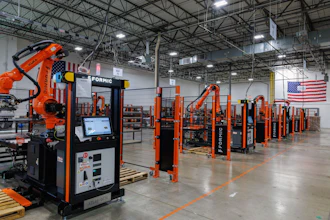
Defense Secretary Pete Hegseth said the drones were manufactured using off-the-shelf components. Emil Michael, under secretary of defense for research and engineering, reported that they went from conceptualization to development in just 18 months on average. Typically, the process takes six years.
Drones may still be considered cutting-edge technology, but technology has advanced far enough that a big-picture redesign is on the horizon. Reinventing everything from power supplies to form factors necessitates a second look at the supply chain. Regardless of how packaging changes, it must meet military specifications.
Compliant packaging is crucial for military equipment, particularly for those as expensive as UAVs. Since many operations occur in extreme conditions, it must be durable enough to withstand adverse elements. Packaging must meet exact standards for identification, strength and safety, or risk product damage or shipping delays.
Predicting the Military Drone Industry’s Future
Major military powers like the U.S. military are stepping away from expensive legacy intelligence, surveillance and reconnaissance aircraft. As building and managing these machines becomes easier, they will likely begin deploying swarms. Each node will have to be purpose-built for rapid communication, precise positioning and real-time decision-making.
Tomorrow’s UAVs will be exceptionally intelligent and durable, redefining the tactical landscape. One market research report predicts hybrid propulsion systems and increased battery energy density will enable next-gen military drones to fly for weeks at a time by 2030. Already, they can remain airborne for days at a time. In time, they could replace troops entirely.
The Defense Advanced Research Projects Agency’s Offensive Swarm-Enabled Tactics program will see small-unit infantry forces using swarms of hundreds of small UAVs and unmanned ground systems in diverse urban environments. They will use augmented reality, gesture, touch and voice-based immersive interface systems for situational awareness.
Preplanned aerial light displays demonstrate proof of concept, but swarms are not yet widely adopted. This is beneficial, as it gives governments time to develop countermeasures before drone swarms present a significant risk.
Drone Technology Will Reinvent the Battlefield
The next-gen military drone designs engineers develop today will determine the outcome of tomorrow’s battles. Future battlefields could see troops replaced entirely with expendable machines, especially as the industry trends toward low-cost, rapid production supported by additive manufacturing.