Automation is a foundational necessity for global industry, driving efficiency, mitigating supply chain risk and helping ensure quality at scale.
As Robotic Process Automation (RPA), a market projected to reach almost $31 billion by 2030, continues to transform business operations, the current focus on advanced technologies like humanoids and physical AI highlights a crucial challenge: the safety infrastructure designed for fixed automation is simply not equipped to manage the complexity of the flexible, autonomous systems now being deployed in discrete and batch manufacturing environments. To support mass adoption and prevent limitations, we must proactively redefine and upgrade our safety approach.
The Challenge of Flexibility: When Fixed Limits Fail
Traditionally, industrial automation was characterized by fixed, deterministic boundaries. A robot arm executed a repeatable task within a caged cell, and safety was protected by pre-defined physical limits and operational constraints. This paradigm is obsolete today. The proliferation of Autonomous Mobile Robots (AMRs) and sophisticated collaborative robots introduce an unparalleled degree of freedom in factory logistics and assembly lines.
These systems are not fixed-task machines; they are agile entities capable of navigating complex, unpredictable environments. While investment is heavily weighted toward these agile solutions, their multi-use, self-directing nature in high-mix production and frequent batch changeovers stresses the fixed-rule baselines upon which legacy safety standards were founded.
We are no longer discussing how to limit a robot’s behavior; we are instead focused on how to empower it to make autonomous, context-contingent decisions. The safety focus shifts from enforcing static rules to ensuring secure, reliable autonomy capable of making real-time adjustments in diverse, changing environments. Compliance with standards like ANSI/RIA R15.08 for mobile robots and ISO 13849 for machinery safety requires this dynamic, context-aware capability.
The Mandate for Proactive, Context-Aware Safety
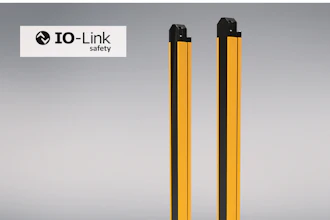
As AI moves robotics from contained labs into dynamic real-world environments, ranging from logistics hubs to advanced manufacturing floors, safety must evolve beyond simple responsive shutdowns. Traditional reactive safety (emergency stop buttons and light curtains, for example) and even predictive models are insufficient. Today’s systems require a focus on proactive safety.
A robotic system operating in real-time must do more than adhere to a fixed programming set. It must possess the awareness to recognize, evaluate and avoid hazards before they materialize. Consider a human driver: they are aware of the speed limit, yet they consciously decide to reduce velocity based on real-time conditions like heavy rain or obscured road surfaces.
The goal for modern robotics is a system that can make equivalent, conscious decisions such as reducing speed when operating near a designated human workstation cell, identifying if a component is misaligned for the next batch process or calculating if a path is too compromised due to a temporary human intervention or floor debris.
In this context, safety is not a limiting factor – it is the enabling foundation for true system agility and human-robot collaboration on the factory floor. Context-aware safety can unlock more efficient operations. When applying traditional safety techniques and analyses, we need to make many worst-case assumptions about the behavior of the robot and its operating environment because we have few ways to detect these in real-time at sufficient precision. In contrast to a driver that slows down when recognizing dangerous conditions, we often need to assume those conditions exist and limit the performance of the robot. Sophisticated sensing of the robot and its environment eliminate the need to assume the worst and apply the right operating rules for the conditions. This will often lead to much less restrictive rules governing robot behavior.
The Tools Needed for Assurance
To achieve this level of proactive safety, industry leaders must commit to two crucial technological pillars:
- Simulations and Digital Twins: Real-world testing remains vital, but digital twins are now the primary platform for cost-effective troubleshooting and assurance. In manufacturing, they are essential for optimizing new factory floor layouts, testing cell configurations and validating complex batch-run logistics. They allow developers to rigorously test corner cases and adapt complex systems to an unlimited variety of scenarios, a task impossible to replicate physically or efficiently.
- Sophisticated Perception: Operational resilience cannot be dependent on pristine conditions. A scratched camera lens or dim lighting should not trigger a precautionary shutdown that halts production. Instead, attention must be channeled into developing robust visual perception and context awareness that adjusts behavior to remain within the bounds of safety while optimizing performance. Often, operating in a diminished capacity is much more desirable than a complete shutdown–allowing for planned maintenance rather than unplanned downtime. This must be paired with a secure control platform. Solutions like FORT Manager for configuration and access, and hardware like the Endpoint Controller for command integrity, are the foundation for managing entire fleets of agile systems on the plant floor.
While the full realization of physical AI will extend beyond 2026, the next phase of investment must be laser-focused on this critical intersection of autonomy and safety. While automation is transformative across industrial and warehousing settings, its full promise in advanced discrete and batch manufacturing operations can only be achieved if we treat safety as the non-negotiable, intelligent enabling layer it must become.