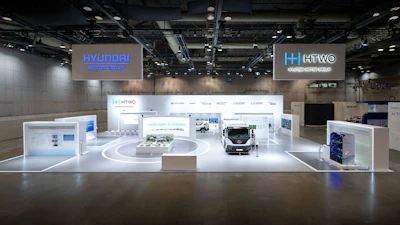
Hyundai Motor Group opened its exhibition at the World Hydrogen Expo 2026 (WHE 2026) in Goyang, Korea, showcasing hydrogen technologies and solutions across production, mobility and applications for cities and industries.
Through its dedicated hydrogen brand and business platform, HTWO, Hyundai organized its exhibition around three key themes: hydrogen production infrastructure, hydrogen mobility and integrated hydrogen ecosystems for cities and industries. Together, the exhibits demonstrated how hydrogen can connect production and mobility with a broader range of end-use applications.
On the opening day of WHE 2026, Hyundai Motor Group Vice Chair Jaehoon Chang visited the Group's exhibition booth and those of other participating companies to review the latest hydrogen technologies and business developments on display.
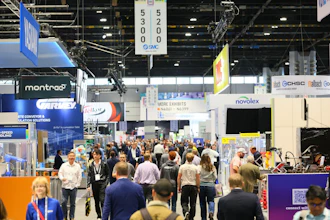
WHE 2026 brought together about 190 companies and organizations from 12 countries through an exhibition, global conference and business partnership programs. Under the theme 'Hydrogen Moves to Market: Making Bankable Projects Work,' the event provided a platform for companies, governments and academia to share hydrogen technologies and business opportunities and explore areas of collaboration.
What Hydrogen Production Technologies Did the Group Showcase?
The Group presented two approaches to hydrogen production: modular polymer electrolyte membrane (PEM) electrolysis and locally integrated waste-to-hydrogen (W2H) solutions.
What Does the Group's Hydrogen Mobility Display Include?
The mobility display spanned passenger vehicles, commercial vehicles (CV) and rail, and highlights solutions for CV operation, fleet management and refueling.
Where Can Integrated Hydrogen Ecosystems Be Applied?
The Group presented scenarios that connect hydrogen production and use based on local energy resources, infrastructure and demand. The scenarios span cities, ports, logistics operations, manufacturing sites and future cities.