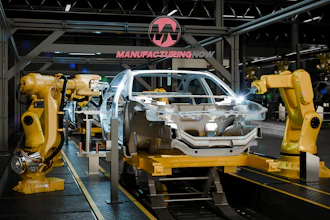
Electric vehicle manufacturing expansion projects are redefining how industrial facilities are planned, built and commissioned. Owners are demanding faster schedules, scalable production capacity and immediate operational readiness.
For project managers, this creates a new challenge: Traditional quality assurance approaches, typically concentrated near project completion, are no longer effective under accelerated delivery models. Projects embedding quality assurance (QA) early in execution consistently outperform those relying on inspection-heavy or reactive processes. Integrating quality into project strategy helps to reduce rework, protect schedules and improve startup readiness. Project teams can position quality as a tool that drives execution rather than slows it.
Quality Begins During Planning, Not Construction
The costliest quality issues rarely originate in the field. Instead, they begin during early planning and design phases, where decisions are made quickly and downstream impacts may not yet be visible. In advanced manufacturing environments, details such as equipment layout, utility routing, battery safety separations and environmental controls directly affect constructability and commissioning.
Early QA participation during front-end planning and design coordination helps identify conflicts before procurement and installation begin. From a project management standpoint, this early involvement reduces redesign effort and prevents schedule-impacting rework later in the project lifecycle.
Align Quality Controls with Fast-Track Execution
Advanced manufacturing projects often run under fast-track schedules, where design, procurement and construction occur simultaneously. While this accelerates delivery, it can also allow installation to move ahead of validation.
To mitigate that risk, milestone-based hold points can be established for critical systems, including structural alignment, process utilities, electrical infrastructure and controlled environments. These checkpoints confirm compliance before downstream trades advanced.
Rather than slowing progress, structured quality validation improves schedule reliability by reducing downstream conflicts and installation corrections, a common source of delay on industrial projects.
Supply Chain Quality Is a Project Management Function
Global sourcing is a defining characteristic of EV facility expansion. Equipment often arrives from multiple regions with varying fabrication standards and documentation practices.
To manage this variability, receiving inspections and documentation verification can be incorporated into project controls workflows. Submittals, inspection test plans (ITPs) and certifications should be validated before installation begins, reducing field-level surprises.
For project managers, supply-chain QA should be treated as a risk-management activity rather than solely a procurement responsibility.
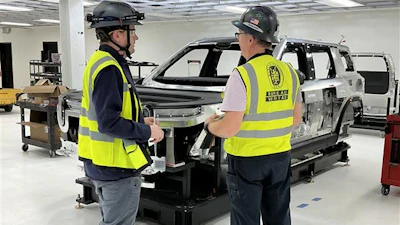
 Commissioning and startup testing supporting operational readiness in an advanced manufacturing facility.Bureau Veritas
Commissioning Is a Critical Quality Event
Commissioning represents the intersection of construction execution and operational reality. On fast-track projects, however, this phase is often compressed, increasing the likelihood of unresolved issues appearing at startup.
Integrating QA documentation directly into commissioning workflows instead of managing punch-list items in isolation, deficiencies are able to be categorized by operational impact and tied to readiness milestones. This allows owners, contractors and startup teams to prioritize system functionality over cosmetic completion, resulting in smoother turnover and faster stabilization of operations.
Data Visibility Drives Better Decisions
Digital QA reporting tools provide real-time visibility into inspections, deficiencies and corrective actions. This transparency enables leadership teams to make faster decisions regarding manpower allocation, sequencing adjustments and risk mitigation.
When project stakeholders share access to live quality metrics, collaboration improves and decision-making accelerates, both are essential in compressing high-pressure manufacturing schedules.
Quality as a Strategic Advantage
The rapid growth of EV manufacturing demonstrates that quality assurance is no longer just about compliance or final inspections. When integrated early and aligned with project execution, QA becomes a strategic advantage, improving predictability, reducing rework and accelerating operational readiness.
As advanced manufacturing continues to evolve, project managers who treat quality as a continuous driver of performance, rather than a final checkpoint, will be best positioned to deliver successful outcomes.
Colin Cunningham is a senior operations leader with Bureau Veritas North America, specializing in quality assurance, commissioning and project delivery for large-scale commercial and industrial facilities. He works with advanced manufacturing clients across North America to integrate quality strategies into fast-track construction programs, improving predictability, safety and startup performance.